

A registration line that forms before doors open is rarely just a registration problem. It can point to a missing badge file, an underpowered check-in setup, unclear wayfinding, or a supplier working from a different version of the event plan. Full-service event planning prevents these small disconnects from becoming visible failures in front of guests, executives, sponsors, and media.
For corporate events, the standard is higher than simply getting every item delivered. Attendees should move confidently from arrival to registration, sessions, networking areas, and exit. Every printed credential, digital screen, kiosk, and branded surface should carry the same visual language. Behind that experience, the event team needs accurate data, dependable equipment, responsive technical support, and a clear chain of accountability.
What Full-Service Event Planning Actually Covers
Full-service event planning is an integrated approach to planning, producing, deploying, and supporting the operational systems that make an event work. Rather than sourcing badge printing from one vendor, equipment rentals from another, software from a third, and onsite technicians separately, the organizer works with one coordinated delivery team.
The scope depends on the event, but it commonly includes registration workflows, attendee data preparation, event permit support, badge design and production, RFID or NFC encoding, self-service check-in kiosks, touchscreen displays, IT hardware rentals, digital wayfinding, exhibition lanyards, branded merchandise, and onsite technical support. The value is not simply convenience. It is control over how these components perform together.
For a leadership conference, that may mean pre-printing secure QR-enabled badges, configuring registration software, staging check-in stations, and providing a specialized onsite team to manage late registrations. For a trade show, it may involve exhibitor credentialing, interactive digital signage, visitor guidance, branded counters, and equipment positioned around a detailed floor plan. A product launch may put more emphasis on visual impact, premium gifts, digital engagement, and fast guest processing.
Why Fragmented Event Delivery Creates Risk
A multi-vendor approach can work for simple events with generous timelines. It becomes harder to manage when the attendee experience depends on several connected systems. A badge printer is only useful when the correct badge template, attendee database, printer settings, stock, power, and network access are ready at the same time.
Fragmentation also makes issue resolution slower. If a self-service kiosk cannot retrieve a registration record, the software provider may point to the network, the network team may point to the device, and the device vendor may point to the configuration. Meanwhile, attendees are waiting. An integrated partner has a stronger reason to diagnose the complete workflow and restore service quickly.
Brand quality is another common point of failure. Corporate marketing teams often approve a precise event identity, but that identity can lose impact when badges, lanyards, signage, screen graphics, and promotional products are produced independently. Differences in color, logo placement, material quality, or finishing may look minor on their own. Together, they make a premium event feel improvised.
Full-service delivery creates absolute consistency by connecting creative specifications to production proofs, hardware layouts, software configurations, and onsite deployment. It does not remove every risk. Large venues may have network restrictions, last-minute guest changes, or permit requirements outside a provider’s direct control. It does, however, create a single operational plan for identifying and managing those risks early.
Start With the Attendee Journey, Not the Equipment List
The strongest event plans begin with the guest journey. Before choosing kiosks, printers, or screens, define who is attending, how they arrive, what they need to show, where they need to go, and what data the organization needs to capture.
Consider an invitation-only corporate forum with VIP guests, speakers, sponsors, and general attendees. Those groups may require different check-in paths, badge access levels, welcome messaging, or support procedures. A speaker may need a badge printed in advance and a direct route to a green room. A walk-in attendee may need a fast QR code scan and a clearly visible help desk. A sponsor representative may need access to an exhibitor area and a lead-capture workflow.
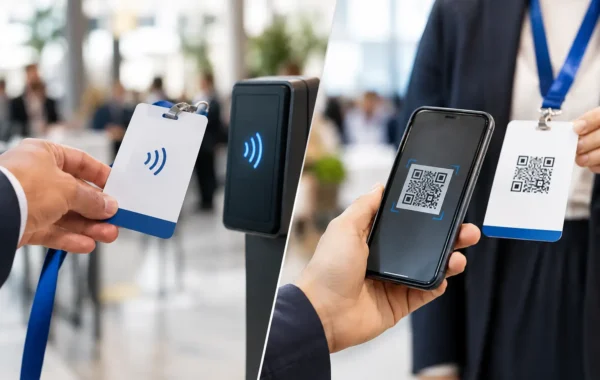
This is where registration software and credential design become operational tools, not decorative extras. QR-enabled credentials can speed up arrival and support session tracking. RFID or NFC cards can be appropriate where secure access, engagement measurement, or cashless interactions are needed. For lower-complexity events, a well-designed printed badge with a scannable code may be the more practical investment.
The right solution depends on attendee volume, venue layout, security expectations, budget, and the consequences of delay. A 100-person internal meeting does not require the same infrastructure as a 3,000-person exhibition. Good planning matches the technology to the real operating requirement rather than adding complexity for its own sake.
Registration Design Is Capacity Planning
Registration needs to be designed around peak arrivals, not average arrivals. If 70 percent of guests are expected within 30 minutes, the check-in system must process that surge without creating a line that blocks entrances or frustrates visitors.
Capacity planning considers the number of stations, average transaction time, staffing levels, badge printing requirements, exception handling, power access, connectivity, and physical queue space. Self-service kiosks can reduce pressure during high-volume arrivals, but only when instructions are clear and support staff are available for guests with missing records, name changes, or scanning difficulties.
A complete plan also includes a fallback process. Pre-printed badge stock, offline attendee lists, backup devices, spare printers, replacement cables, and technical escalation procedures give the onsite team options when conditions change. This is the difference between a technical setup and a resilient event operation.
Connect Brand Production to Onsite Reality
Event branding must be approved in a format that can be produced accurately and installed effectively. A screen graphic designed without confirming the display orientation can require a rushed redesign. A badge layout that looks refined on screen may become unreadable at its printed size. A branded gift may need a different print process depending on its material, surface, and quantity.
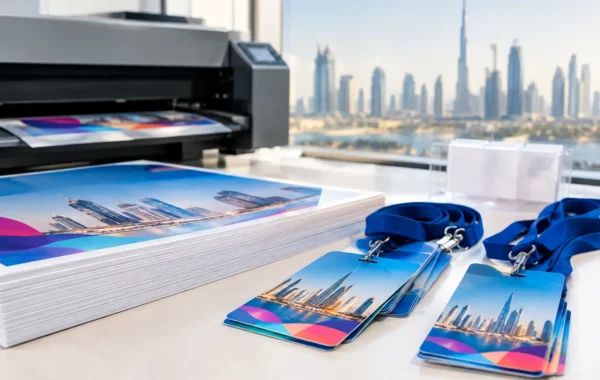
A full-service provider brings design, production, and deployment into the same conversation. UV printing can support durable, high-detail personalization on selected products and materials. Sublimation printing can produce vibrant, full-color results for compatible items. Secure PVC cards can be personalized with attendee details, QR codes, barcodes, RFID or NFC chips, and corporate branding.
Proofing is essential. Teams should review badge samples, lanyard artwork, signage dimensions, encoded card functionality, and personalized product proofs before production moves forward. This protects quality while allowing procurement, marketing, and event operations to approve the same deliverable from their respective perspectives.
At Smart Track Zone, this coordination extends from consultation and design through hardware staging, print production, delivery, and onsite technical support. That connected workflow is particularly valuable when timelines are compressed or when the event includes both physical branding and digital guest systems.
Build an Execution Plan Before Event Day
A reliable event is prepared long before the first guest arrives. The execution plan should assign ownership, confirm deadlines, and document how each component will be tested. It should also account for venue access times, loading routes, storage restrictions, power locations, internet availability, and health and safety requirements.
Software configuration should be tested using realistic attendee records and the exact devices intended for the event. Badge printers should be calibrated with approved stock. Kiosks should be staged with final screen content and placement labels. Digital signage should be checked for resolution, scheduling, and visibility from the intended viewing distance.
For events in the UAE and Saudi Arabia, organizers may also need to coordinate venue rules and local permit requirements. This should happen early, especially where public attendance, temporary structures, branded installations, or specialized equipment are involved. Permit support does not replace the organizer’s responsibility, but it can reduce avoidable delays by keeping documentation and requirements organized.
Onsite Support Protects the Guest Experience
No matter how carefully an event is planned, onsite conditions can change. A VIP arrives unlisted. A speaker’s name is updated. A screen needs to be moved because of venue traffic. A printer requires immediate attention during peak registration. These moments require a team that understands both the equipment and the event priorities.
Specialized onsite technicians provide more than troubleshooting. They monitor check-in flow, manage replacement supplies, coordinate technical changes, and communicate clearly with event leadership. Their presence allows internal marketing, HR, and event teams to focus on guests and stakeholders rather than trying to solve hardware or software issues under pressure.
The best measure of full-service event planning is not how much technology is visible. It is how little friction attendees feel as they move through a polished, organized, and unmistakably on-brand experience. When every touchpoint has been planned to work together, your team can spend event day where it matters most: with the people the event was built to bring together.