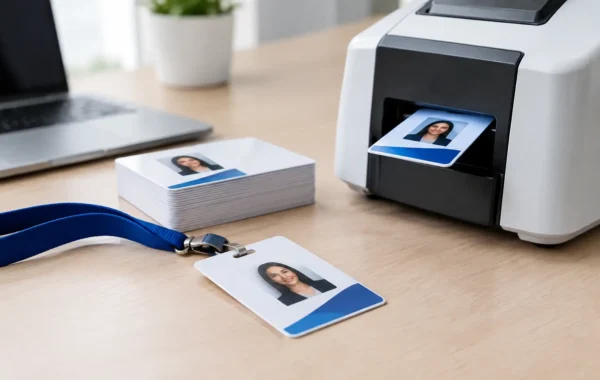


A membership card is often handled more often than any brochure, email, or campaign asset. At a reception desk, gym entrance, private club, loyalty counter, or members-only event, it must identify the holder quickly and represent the organization without compromise. Professional membership card printing turns that small physical item into a controlled brand touchpoint, access credential, and service tool.
For corporate teams, hospitality operators, associations, and membership-based organizations, the question is not simply whether a card looks attractive. It is whether the card can withstand daily use, work with the required technology, protect member information, and arrive on schedule with absolute consistency.
What membership cards need to accomplish
A membership card may have a simple role, such as confirming eligibility for a program. It can also sit at the center of a more complex operation, connecting a member to access control, reward balances, check-in records, booking systems, or VIP experiences. The right specification depends on what happens after the card is issued.
A premium fitness club, for example, may require a durable PVC card encoded for turnstile entry. A hospitality brand may need a visually elevated card for a loyalty or privileges program. An association may use cards to identify members at conferences while also enabling fast registration through QR codes. Each requirement affects card material, print method, personalization fields, and finishing choices.
This is why the most effective projects begin with operational planning rather than artwork alone. A card design can be visually flawless and still fail if the barcode scans poorly, the magnetic stripe is incompatible, or the card stock does not perform in the intended reader.
Membership card printing starts with the right card specification
PVC remains the standard material for durable membership credentials. It has the familiar feel of a bank card, supports high-quality full-color printing, and performs well for programs where members keep cards in wallets or use them repeatedly. Composite cards can provide additional resilience in demanding environments, particularly where temperature changes or frequent handling are expected.
Card thickness matters as well. Standard CR80 cards are commonly used because they work with most wallets, printers, and access-control hardware. Thinner cards may suit short-term campaigns or mailers, while a standard thickness is generally the better choice for long-term membership and identification programs.
The print finish should reflect both the brand and how the card will be used. Gloss lamination creates saturated color and a polished appearance. Matte finishes reduce fingerprints and can feel more understated for corporate, professional, or luxury applications. Spot UV can add contrast to a logo or member tier, but it should not interfere with barcodes, signature panels, or encoded areas.
For programs that require an added layer of distinction, metallic effects, foil elements, frosted PVC, or textured finishes can create a stronger first impression. These options work best when used with restraint. A card overloaded with effects can look less premium and become harder to reproduce consistently across future print runs.
Design for quick recognition
A membership card should be understandable at a glance. The member name, organization identity, membership level, and expiry date, if relevant, need a clear visual hierarchy. Staff should be able to verify the card quickly without searching for critical details.
Brand colors must be converted and proofed for the selected print process rather than assumed from an on-screen design. Corporate color accuracy is especially important when cards sit alongside branded lanyards, event badges, welcome packs, signage, and merchandise. Consistent production across those elements protects the experience members associate with the organization.
Avoid placing essential data too close to card edges, barcode quiet zones, magnetic stripes, or RFID antenna areas. A professional production review identifies these issues before files go to print, reducing waste and preventing last-minute rework.
Choose technology based on the member journey
Not every membership program needs encoded technology. For smaller organizations, a printed card number or QR code may be enough to validate a membership at point of service. QR-enabled cards are cost-effective, easy to scan with smartphones or tablets, and useful for event registration, digital profiles, promotions, and visitor records.
RFID and NFC cards are more appropriate when speed, access control, or contactless interaction is a priority. They can support secure entry through gates, tap-to-check-in processes, cashless environments, equipment access, loyalty tracking, and interactive activations. The member taps the card rather than handing it to staff, which can reduce queues and create a more controlled experience.
The trade-off is that encoding requires coordination with the software platform, reader technology, data structure, and security rules. A chip type cannot be selected in isolation. The card must be tested against the actual devices and system configuration before full production begins.
Magnetic stripe cards remain relevant for legacy systems, but they are generally less flexible than RFID, NFC, and QR-based options. If an organization is modernizing its member journey, it is worth assessing whether a newer credential format will reduce future operational limitations.
Personalization is where security becomes practical
Personalized card printing can include names, unique membership numbers, photographs, barcodes, QR codes, expiry dates, departments, and tier designations. These details make the card usable, but they also require disciplined data handling.
A secure workflow should validate the approved data source, map each field correctly to the print layout, and generate a proof or sample before production. Duplicate records, incorrect names, missing IDs, and mismatched photos are not minor presentation issues. They can delay access, create member frustration, and weaken confidence in the program.
For higher-security use cases, organizations may add features such as holographic overlays, tamper-evident elements, UV printing, signature panels, or controlled serial numbering. The appropriate level of security depends on risk. A community rewards card does not need the same protection as an executive facility-access credential.
Plan production around distribution, not just printing
A completed card is only valuable when it reaches the correct person in the correct condition. That is why membership card printing should include a clear fulfillment plan from the start.
For a new membership launch, cards may be sorted by branch, member tier, department, or delivery batch. For an event-based program, cards can be paired with lanyards, badges, welcome letters, and branded holders. For ongoing issuance, the organization may need a process for replacements, renewals, upgrades, and temporary cards.
Packaging has a practical role. Individual card carriers protect cards in transit and provide space for activation instructions or terms. Premium presentation packs may be appropriate for VIP memberships, corporate hospitality, or high-value loyalty programs. The choice should match the perceived value of the offer without creating unnecessary cost or waste.
Timing also deserves careful attention. Variable-data production, encoding, quality checks, and sorting take longer than a standard static print run. If cards are needed for a launch, opening, conference, or seasonal campaign, production should include allowance for final data approvals and sample testing. Rushing the final stage is where avoidable errors tend to appear.
Why integrated delivery reduces risk
Membership cards rarely exist as a stand-alone item. They often connect to registration platforms, kiosks, access readers, badge printers, staff training, and onsite support. When separate suppliers manage each component, accountability can become unclear when a card does not scan or a design element conflicts with the hardware.
An integrated provider can align the card specification with the technology environment before deployment. That includes artwork checks, data preparation, RFID or NFC encoding, hardware staging, sample validation, production control, and technical support. For organizations running member activations or corporate events in the UAE and Saudi Arabia, this approach is particularly valuable when timelines are tight and onsite conditions leave little room for troubleshooting.
Smart Track Zone applies this coordinated model across print personalization and event technology, helping teams protect brand quality while keeping access and check-in operations organized. The value is not simply in producing cards. It is in ensuring that the physical credential performs as intended within the full member experience.
A card worth keeping
The best membership card does not ask members to think about the system behind it. It scans on the first attempt, looks consistent months after issue, and makes the holder feel recognized. When design, material, data, and technology are planned as one production workflow, the card becomes a dependable extension of the brand rather than another operational detail to manage.