
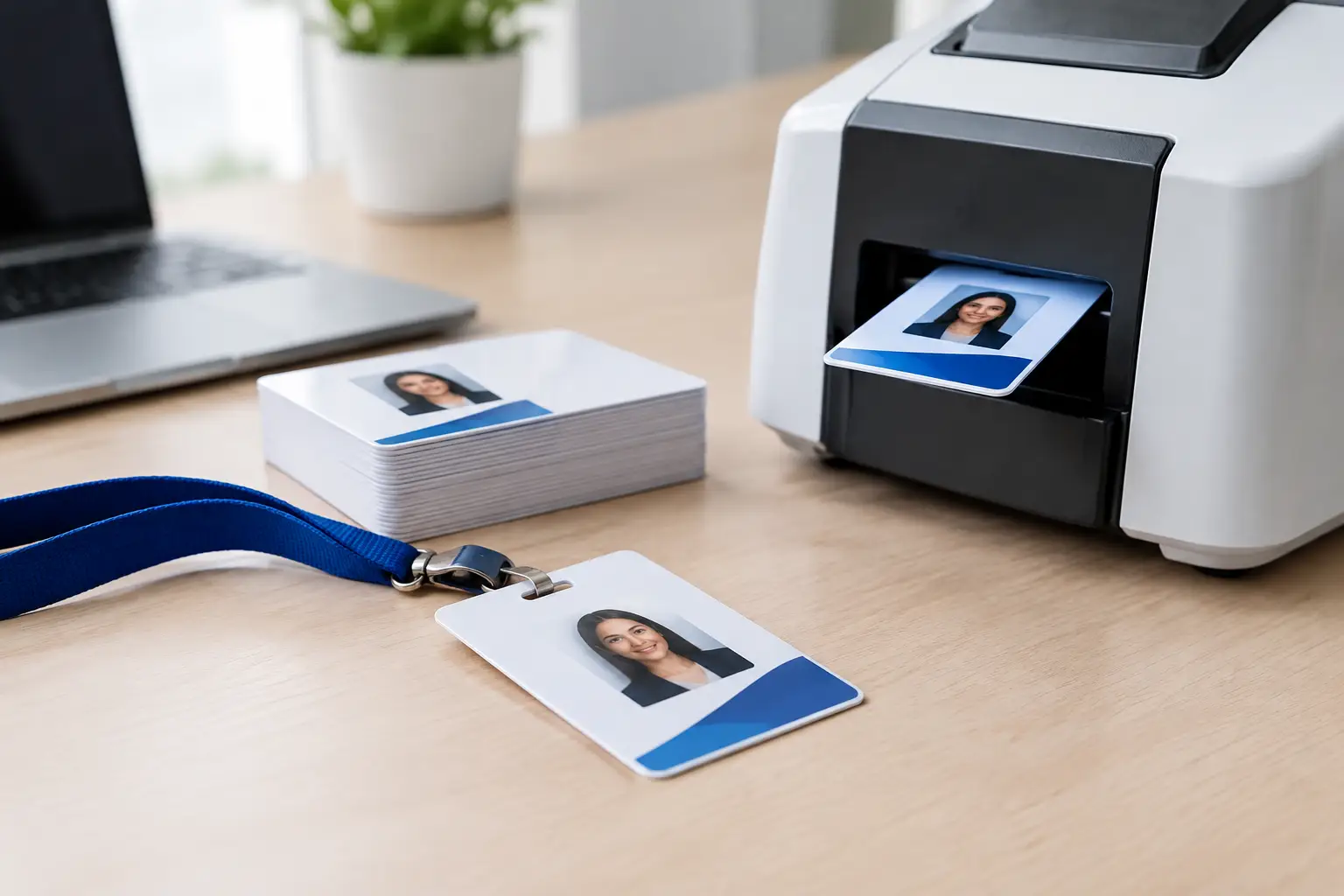

A credential is often the first physical interaction an attendee, employee, visitor, or VIP has with your organization. If the card feels flimsy, displays incorrect information, or delays entry at the registration desk, it weakens confidence before the conversation even begins. PVC ID card printing turns a functional access tool into a controlled, durable extension of your brand.
For corporate events, workplaces, hospitality venues, and membership programs, the right card program must do more than look polished. It needs to support identification, access control, attendee flow, data accuracy, and onsite operations without creating extra work for your team.
Why PVC Cards Remain the Professional Standard
Paper badges have a place at high-volume, short-duration events, especially when schedules change rapidly and credentials are issued in large quantities. PVC cards serve a different purpose. Their rigid format, clean edge finish, and consistent print surface make them appropriate for credentials that need to withstand repeated handling, retain a premium appearance, or support embedded technology.
A well-produced PVC card offers dependable color reproduction, sharp text, and space for security features such as barcodes, QR codes, photo identification, serial numbers, holographic overlays, or encoded RFID and NFC chips. This makes it suitable for employee identification, visitor programs, access cards, executive credentials, membership cards, parking permits, and premium event passes.
The decision is not simply PVC versus paper. It depends on duration, security requirements, how the credential will be used, and the experience you want to create. A one-day conference may use printed event badges for most attendees while reserving PVC credentials for speakers, staff, sponsors, and restricted-access guests. That mixed approach controls cost while maintaining clear access hierarchy.
PVC ID Card Printing Starts With Operational Planning
High-quality cards are the result of a disciplined workflow, not just a print file sent at the last minute. Before production begins, the project team should define card purpose, quantity, variable data fields, security needs, branding rules, and the method used to issue each card.
For example, an employee card may require a name, photo, job title, department, employee number, barcode, and proximity encoding. An exhibition credential may need attendee category, company name, QR code, event dates, sponsor branding, and color-coded access zones. Both are PVC cards, but they require different data preparation, approval processes, and quality checks.
Design also needs to account for practical use. Small type can become difficult to read at a security checkpoint. Low-contrast color combinations may look refined on screen but fail under venue lighting. A full-bleed dark design can show wear more visibly than a lighter layout. These are minor details during artwork review, yet they have a direct effect on how the credential performs in the field.
Variable Data Requires a Controlled Process
Variable data is where many card projects become vulnerable. Names, photos, IDs, access permissions, and codes often arrive from different teams in inconsistent formats. A production-ready process standardizes these files, confirms required fields, identifies missing information, and checks duplicates before printing begins.
For event operations, this can be coordinated with registration data so that each record is mapped correctly to the badge or card layout. For workplace programs, HR and administration teams should establish approval rules for new cards, replacements, and deactivated credentials. The aim is absolute consistency between the person, the printed information, and the system behind the card.
Selecting the Right PVC Card Format and Finish
Most PVC ID cards follow the CR80 format, the standard credit-card size that fits common badge holders, access readers, and wallets. Within that familiar format, the material, print method, finish, and encoding options can be adapted to the project.
A standard white PVC card is effective for everyday employee IDs and visitor credentials. Composite cards can be more suitable where repeated use, temperature variation, or retransfer printing is required. For premium applications, frosted cards, metallic effects, spot UV details, or custom-shaped cards can reinforce a launch campaign, executive program, or exclusive membership proposition.
Finish should be chosen with use in mind. Gloss creates strong color impact and can make photographic designs feel more vibrant. Matte finishes reduce glare and are often easier to read under bright lighting. A writable panel may be useful for cards requiring a handwritten date or temporary authorization. Lamination adds protection, particularly for cards exposed to frequent handling, outdoor use, or cleaning procedures.
A premium finish should never interfere with scanning, readability, or durability. The most effective card design balances visual impact with the everyday realities of access points, wallets, lanyards, and registration counters.
Security Features Should Match the Actual Risk
Not every PVC card needs every security feature. Over-specifying can increase cost and complicate production, while under-specifying may expose a venue, event, or workplace to unauthorized access. The appropriate level depends on what the credential allows its holder to do.
For basic identification, a photo, branded layout, unique ID number, and barcode may be sufficient. For controlled environments, RFID or NFC encoding can connect the card to door access, attendance tracking, cashless systems, session entry, lead capture, or hospitality privileges. QR codes are useful when a smartphone or scanner needs to retrieve a live record from a registration or visitor-management platform.
Visible access indicators also matter. Color bands, role labels, icon systems, and clearly printed zones enable security staff to make fast decisions without relying solely on a scan. This is particularly valuable during exhibitions, product launches, and multi-room conferences where delegates, crew, media, suppliers, and VIP guests require different permissions.
For higher-risk applications, organizations may add serialized numbering, holographic layers, UV-visible marks, or tamper-evident elements. These controls should be planned early because security features affect artwork, production timing, and card handling procedures.
Integrating Cards With Event Technology
PVC ID card printing becomes more valuable when it is planned as part of the event environment rather than treated as an isolated print order. A card can connect registration, self-service check-in, access control, session tracking, digital wayfinding, and personalized guest engagement.
At a conference, a guest may register online, receive a QR code by email, check in at a kiosk, and collect a personalized PVC credential from the registration desk. The same credential can then be scanned at session rooms, VIP lounges, exhibition areas, or activation stations. That creates a more organized arrival experience while giving organizers reliable attendance data.
The operational advantage comes from alignment. Registration software, badge-printer settings, scanner configurations, data fields, and onsite staffing all need to be tested before doors open. A beautifully printed card cannot solve a poorly configured check-in process. Equally, excellent event software loses value if credentials are unreadable, incorrectly encoded, or unavailable when attendees arrive.
Smart Track Zone approaches these projects as connected deployments, coordinating card production with registration technology, hardware staging, visual branding, and specialized onsite support. This structure reduces handoffs between suppliers and gives event teams one accountable partner for credential performance from proof approval through live issuance.
Onsite Printing Versus Pre-Printed PVC Cards
Pre-printed PVC cards are ideal when the attendee or employee list is stable, artwork has been approved, and cards can be checked and packed before deployment. They provide the strongest opportunity for detailed finishing, advance quality control, and orderly distribution.
Onsite printing is valuable when registrations continue close to the event date, guest details are likely to change, or walk-in attendance is expected. It allows a team to issue new credentials, correct names, and replace lost cards during live operations. However, onsite issuance requires properly configured printers, tested consumables, stable data connections, spare equipment, and trained technicians.
Many corporate events benefit from a hybrid model. Core attendee and staff cards are pre-produced, while a dedicated onsite station handles late registrations, upgrades, corrections, and replacements. This protects registration speed without sacrificing flexibility.
Quality Control Is What Protects the Brand
The final card should be reviewed as a physical object, not only as a digital proof. Production checks should confirm color accuracy, text legibility, photo quality, data placement, barcode or QR readability, encoding status, edge quality, and correct card count. For large programs, sample approval and batch checks help catch issues before they reach the registration desk or workplace.
Packaging and distribution also deserve planning. Cards can be sorted alphabetically, by department, by access category, by registration group, or by venue collection point. For events, pairing each card with the correct lanyard, holder, welcome pack, or sponsor insert can save significant time during setup.
A card program performs best when it is designed around the moment it will be used. Define the access journey, prepare the data carefully, select materials that fit the environment, and test every technical element before deployment. The result is a credential that works quickly in the hands of staff and guests while presenting your organization with the precision it expects.