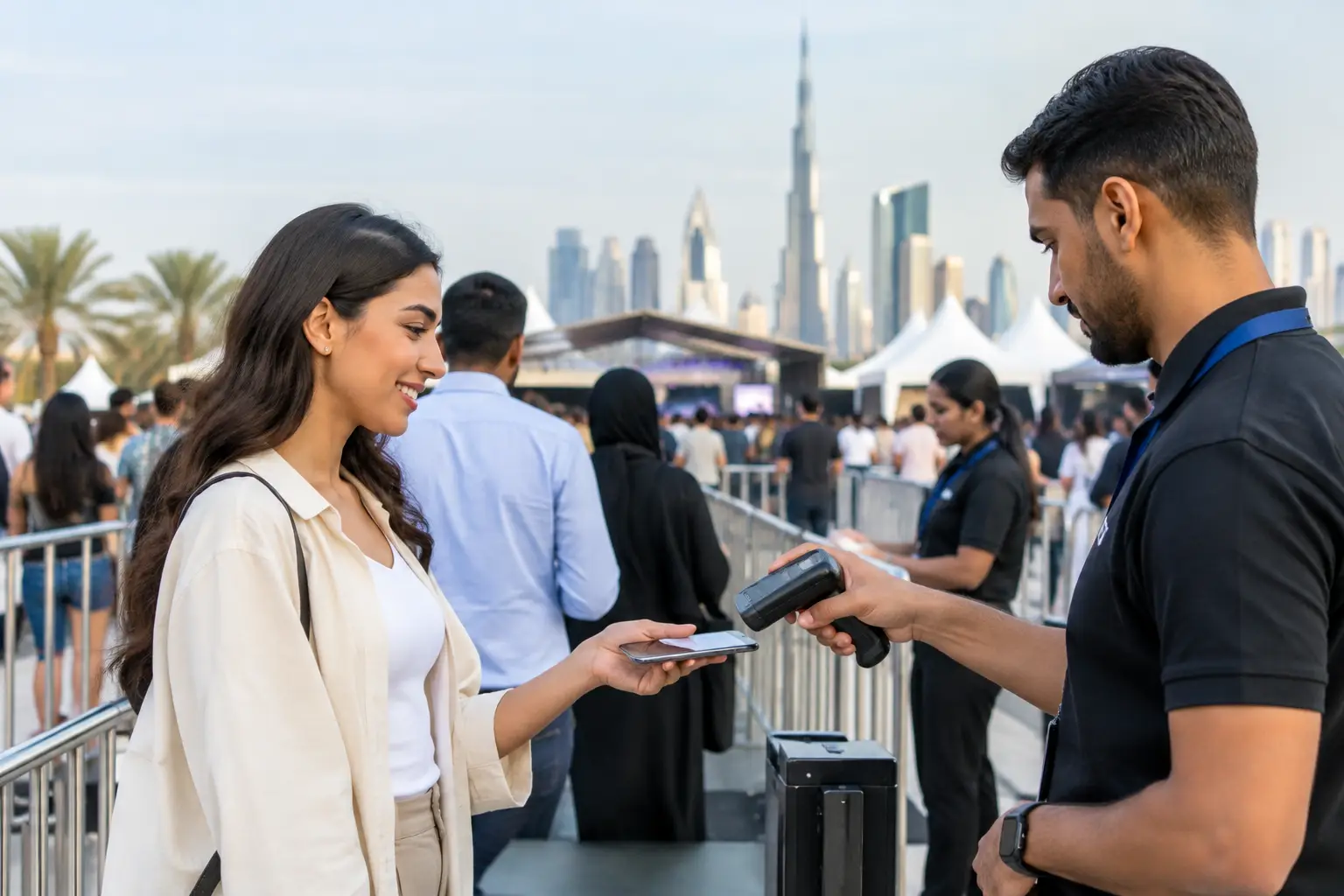

A packed registration desk can change the mood of an event before the first speaker takes the stage. Guests who have traveled across Dubai or arrived directly from the airport do not judge an event only by its program. They notice the queue, the clarity of directions, the speed of badge collection, and whether staff can answer questions with confidence. For event ticketing & crowd management UAE organizers, these early moments are where operational planning becomes a visible part of the brand.
Corporate conferences, product launches, exhibitions, gala dinners, and internal town halls all have different audience flows. Yet the operational goal is consistent: verify the right guests quickly, direct them intelligently, maintain venue capacity, and create a polished experience without adding friction. That requires more than an online ticket page or a few staff members at a registration table. It requires an integrated system of registration data, credentialing, equipment, signage, and onsite support.
Why Event Ticketing and Crowd Management Must Work Together
Ticketing is often treated as a pre-event task, while crowd management is seen as a venue-day responsibility. In practice, they are one operational chain. The registration choices made weeks before an event determine whether entry is controlled or chaotic on the day.
Every attendee record should support a clear action at the door. That may be a QR code scan, a printed invitation, a name search, an RFID or NFC credential, or a pre-printed badge. The right method depends on attendance volume, venue access points, security requirements, and the type of guest experience required. A private executive event may prioritize discreet identity verification and premium badges. A high-volume exhibition may prioritize fast self-service check-in and real-time attendance visibility.
When ticketing data, check-in technology, and physical credentials are managed separately, small inconsistencies become expensive delays. A guest may be registered but not assigned to the correct access category. A badge may be printed with an outdated company name. A VIP list may not reach the hospitality desk. A unified event setup reduces these gaps by aligning registration fields, badge designs, access rules, and onsite workflows before doors open.
Build the Entry Plan Before Selecting Technology
Technology should support an entry plan, not replace one. The starting point is a practical review of attendee movement: where people arrive, how they are screened, where they collect credentials, where they pause, and where they need to go next.
For a conference with 500 pre-registered delegates, several branded self-service kiosks paired with staffed exception desks may create the best balance. Guests can scan a confirmation QR code, print a badge, and proceed to wayfinding signage. Staff then focus on name changes, walk-in registrations, VIP support, and technical exceptions instead of manually searching every attendee record.
For a product launch with controlled guest lists, staffed check-in stations may be more appropriate. The arrival experience can be more personal, while QR scanning confirms attendance and triggers accurate guest counts. For exhibitions, registration often needs separate pathways for visitors, exhibitors, speakers, contractors, and media. Each group may require different badge colors, access permissions, and arrival instructions.
A strong plan also accounts for the moments when systems are tested most heavily. Guests rarely arrive evenly across an eight-hour window. They tend to arrive in peaks: 30 minutes before a keynote, immediately after lunch, or just before a high-profile launch. Capacity planning should be based on expected peak arrivals, not average arrivals.
Design for exceptions, not only the ideal queue
The best registration environments are designed around real-world exceptions. Some guests will forget their QR code. Some will arrive with a different spelling than the registration record. Others will bring an unregistered colleague, request a replacement badge, or require special access.
An exception desk with trained staff, live registration access, spare badge stock, and clear escalation authority protects the main queue from these issues. It is a small operational detail with a major effect on perceived organization. Guests should never have to guess where to go when something does not match.
Credentials Are Both Security Tools and Brand Assets
A badge is more than a name label. It is a physical access credential, a wayfinding aid, and a highly visible expression of the event brand. For multi-day events, badges also need to withstand repeated handling without losing readability or visual quality.
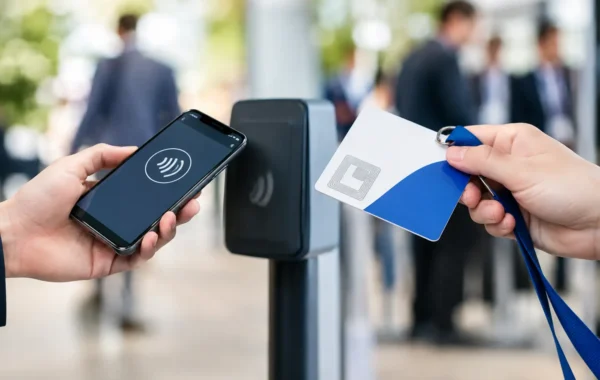
Secure PVC cards, QR-enabled badges, RFID/NFC-encoded credentials, and color-coded lanyards can each support different levels of access control. QR codes are efficient for event check-in and session validation. RFID or NFC technology can be valuable when organizers need quicker tap-based access, controlled zones, attendance tracking, or interactive engagement points. The added investment makes most sense when data capture, security, or repeated access validation has a defined business value.
Credential design should make operational information easy to scan at a glance. Name, company, category, and access level should be readable from a practical distance. If staff need to identify VIP, speaker, exhibitor, or crew access, color bands and visual markers should be consistent across badges, signage, and team briefings. Decorative design that obscures the important information creates unnecessary friction at every checkpoint.
Crowd Management Depends on Visible Guidance
People move more confidently when the environment answers their questions before they need to ask. At large venues, digital signage, touchscreen kiosks, directional displays, and branded floor guidance can reduce pressure on event staff while improving guest flow.
The most useful messages are often the simplest: registration this way, hall opening time, session room locations, VIP lounge access, shuttle collection point, or exhibitor zone. These messages should appear before congestion starts, not only at the point where guests are already deciding where to go.
Interactive digital signage adds value when attendees need searchable agendas, floor plans, sponsor directories, or session details. It is especially useful at exhibitions and conferences where guests arrive with different priorities. However, screens should not become the only source of essential instructions. Clear static signage remains necessary when guests are walking quickly, carrying bags, or navigating a busy lobby.
Use Live Data to Make Better Onsite Decisions
A well-configured check-in platform gives organizers more than a list of arrivals. It provides a live picture of attendance, no-shows, arrival timing, and capacity at selected access points. That information helps the event team make decisions while they still matter.
If a secondary registration area is receiving little traffic, staff can be reassigned to the main entrance. If a keynote room is nearing capacity, teams can guide late arrivals to an overflow area before the doorway becomes congested. If VIP arrivals are scheduled within a narrow time window, hospitality and security teams can prepare their positions in advance.
The quality of this data depends on disciplined setup. Registration categories, attendance statuses, access permissions, and reporting requirements must be agreed upon before the event. Last-minute spreadsheet changes without version control are a common source of check-in errors. A single operating team managing software configuration, hardware staging, badge production, and onsite support provides greater control over those dependencies.
A Practical Deployment Workflow for UAE Events
For event ticketing and crowd management in the UAE, venue rules, event permit requirements, guest privacy, and multilingual communication can all shape the final setup. The most reliable projects begin with an operational consultation rather than a generic equipment order.
A complete deployment typically moves through four stages: attendee and access mapping, technical and visual configuration, controlled production and staging, then onsite operation. During planning, the team defines registration fields, access categories, badge formats, expected arrival peaks, counter layouts, and equipment needs. During configuration, software workflows are tested, QR or RFID/NFC credentials are encoded where required, and branding proofs are approved.
Production should include rigorous quality control for printed badges, lanyards, cards, and signage. Hardware should be staged and tested as a working environment, not delivered as isolated devices. Printers, scanners, kiosks, laptops, displays, network connections, backup supplies, and help-desk materials all need to work together under event conditions.
Onsite, a specialized technical team can manage check-in stations, troubleshoot printers or scanners, support staff, and adapt guest-flow arrangements as arrival patterns change. This is where an integrated partner such as Smart Track Zone brings value: technology configuration, physical branding, equipment rental, credential production, and onsite execution are coordinated as one operation.
The Standard Guests Remember
Guests may not remember every registration detail when the event runs well. They will remember that arrival felt organized, their badge looked professional, directions were clear, and the event respected their time. That outcome is built through careful planning long before the first QR code is scanned.
The strongest event environments treat ticketing, credentialing, wayfinding, and crowd movement as one connected guest journey. When every touchpoint is prepared for volume, exceptions, and brand expectations, the event team can focus less on fixing queues and more on delivering the experience people came for.