

A packed registration desk tells a story before the first speaker walks onstage. So does a badge that scans correctly, a kiosk that guides a visitor without confusion, and signage that carries the same visual standard as the campaign that invited them. Every event has a story. Let us create yours by designing the operational moments that attendees remember as effortless.
For corporate teams, the story is not created by one dramatic centerpiece. It is built through hundreds of small, highly visible details: how quickly guests enter, whether credentials feel premium and secure, whether sponsors are represented accurately, and how confidently the onsite team responds when plans change. The strongest events make that complexity invisible to the audience.
Every Event Has a Story – Start With the Guest Journey
An event story begins well before arrival. The registration experience sets expectations for the entire program, whether it is a leadership conference, product launch, exhibition, employee gathering, or hospitality activation. A guest who receives clear pre-event communication, reaches a well-branded check-in point, and collects a ready credential is immediately oriented. A guest who encounters long lines, unclear instructions, or mismatched branding starts with friction.
This is why event technology should be planned as part of the attendee journey, not added after creative decisions are finalized. Registration software, QR-based confirmation, self-service check-in, staffed counters, badge printers, and RFID or NFC credentials each have a role. The right mix depends on audience size, venue layout, security requirements, arrival patterns, and the value of the data you need to collect.
For a private executive session, a hosted welcome desk and premium printed credentials may be the best choice. For a high-volume exhibition, self-service kiosks and preconfigured badge stations can reduce queues and give staff more time to handle exceptions. Neither approach is automatically better. The operational objective is to make arrival feel controlled, personal, and aligned with the event’s purpose.
Build One Connected Event Environment
A polished event cannot rely on disconnected suppliers handing off separate pieces of the experience. A printer may produce badges, an equipment vendor may deliver screens, and a software provider may configure registration, but gaps between those services often become problems on event day. A name field may not fit the badge artwork. A kiosk may arrive without the correct content. A last-minute attendee may not be reflected in the access list.
Integrated execution changes the equation. The event environment is planned as one system, with registration data, hardware layouts, visual branding, credential production, digital content, and onsite support working from the same operational brief. This gives organizers greater control over both appearance and performance.
At Smart Track Zone, that process can include consultation, artwork review, software configuration, card encoding, equipment staging, delivery coordination, and specialized onsite technical support. The practical benefit is clear: fewer handoffs, faster decisions, and absolute consistency across guest-facing touchpoints.
Credentials That Do More Than Identify
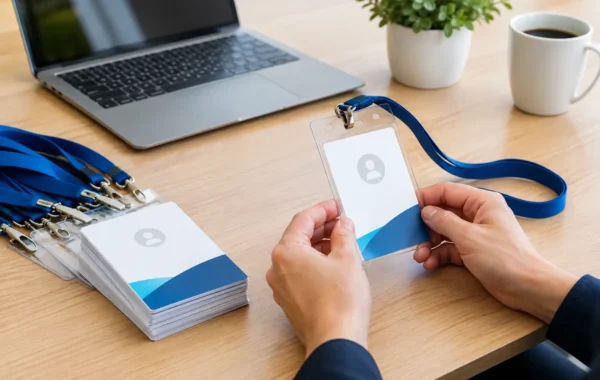
A badge is one of the most handled brand assets at any corporate event. It should look intentional, remain readable through a full day of activity, and support the level of access control required. For exhibitions and conferences, it can also serve as a wayfinding tool, sponsor asset, networking prompt, or entry credential.
Secure PVC ID cards, custom attendee badges, QR-enabled passes, and RFID/NFC-encoded credentials allow event teams to connect identity with access and engagement. An encoded card can support controlled entry to restricted areas, while a QR code can speed up validation at a registration point. For membership programs, employee identification, and recurring visitor environments, the same technology can extend beyond a single event.
The production decision matters. Paper badges may suit a large, single-day audience with straightforward access needs. PVC cards provide a more premium, durable option for VIPs, staff, speakers, and ongoing programs. The right material, finish, lanyard, and data configuration should reflect the event’s operational demands, not simply its visual theme.
Screens and Kiosks That Help People Move
Digital signage is most valuable when it answers a question before a guest needs to ask it. Where do I check in? Which hall is the keynote in? When does the next session begin? Where is the networking reception? Touchscreen kiosks and interactive displays can provide responsive answers while reinforcing the event’s visual identity.
Static signage still has a place, particularly where immediate visibility and simple direction are needed. Digital displays are more flexible when schedules may change, multiple languages are required, or content needs to rotate throughout the day. The trade-off is that digital infrastructure needs thoughtful power planning, content management, testing, and technical supervision. A screen is only useful when it is positioned correctly, showing current information, and functioning when attendees need it.
That is why hardware staging matters as much as the technology itself. Screen sizes, kiosk placement, network requirements, cable management, and accessibility should be reviewed before deployment. A clean floor plan protects both the guest experience and the event team’s ability to operate efficiently.
Create Yours Through Operational Precision
The most successful events are designed for real conditions, not ideal ones. Attendees arrive early. A speaker requests a replacement badge. A sponsor changes a logo. A VIP needs access to a private area. Internet performance varies by venue. These are not failures of planning; they are normal event realities. The difference is whether the infrastructure and support team can respond without making the disruption visible.
A strong pre-event workflow anticipates those moments. It includes registration testing, badge proof approval, data validation, equipment checks, content review, contingency stock, and clear escalation contacts. If permits are required, they should be addressed early enough that approvals do not become a last-minute constraint. If the event involves sensitive attendee data or controlled access, permissions and credential rules should be tested with the same care as the visual artwork.
Rigorous quality control is especially important when physical and digital components meet. A name printed incorrectly on a badge can create an awkward first impression. An inaccurate QR code can slow entry. An artwork file that looks correct on a monitor may not translate as expected in print. Proofing, sample production, and end-to-end testing turn potential issues into controlled adjustments before guests arrive.
Brand Consistency Is an Operational Standard
Corporate branding is sometimes treated as a separate creative layer applied after the technical work is complete. At an event, that separation rarely holds. Brand quality is experienced through the registration backdrop, the lanyard, the screen template, the sponsor wall, the staff IDs, the printed agenda, and the gift handed to a guest at departure.
Consistency across those items creates confidence. It signals that the organization is prepared, invested, and attentive to detail. This is especially relevant for product launches, investor events, trade shows, and executive gatherings, where each physical element contributes to how the organization is perceived.
Custom merchandise and premium corporate gifts can extend that experience beyond the venue, but only when they serve a clear purpose. A useful, well-produced item with accurate branding is more valuable than a large quantity of generic giveaways. UV and sublimation printing make it possible to tailor products to campaigns, audiences, and event themes while retaining control over color, placement, and finish.
Make the Story Easy to Experience
The goal of event infrastructure is not to put technology at the center of the room. It is to make every necessary interaction feel straightforward. Guests should know where to go. Teams should have the tools to manage access. Brand managers should recognize their visual standards in every touchpoint. Procurement leaders should see a clear scope, accountable delivery, and fewer supplier coordination risks.
That requires early alignment between the event objective and the operating plan. Start by defining what the audience must feel and do: register, arrive, identify themselves, navigate, participate, connect, and leave with the right impression. Then map the tools, printed materials, staffing, and support needed to make each stage work.
When the final guest walks out, they may not remember the printer model, the software configuration, or the network setup. They will remember whether the event felt organized, welcoming, and worthy of their time. Build for that feeling first, and the story will carry long after the venue is cleared.