
A lanyard is often the first branded item an attendee receives and the one they wear for the entire event. That makes customized lanyards and eco-friendly lanyards printing in Dubai more than a promotional purchase. It is a practical decision that affects credential visibility, access control, sponsor exposure, attendee comfort, and the perceived quality of the event environment.
For conferences, exhibitions, product launches, visitor programs, and corporate campuses, the right lanyard must work as reliably as it looks. It needs to hold the correct badge format, remain comfortable through a full day, align with brand standards, and arrive on schedule alongside badges, registration hardware, and other event materials. The strongest results come from treating lanyards as part of the credentialing system, not as a separate print item ordered at the last minute.
Why Lanyards Matter in Corporate Event Operations
A lanyard performs several jobs at once. It keeps an ID badge visible for security staff and event teams, helps attendees move through access points faster, and turns every participant into a visible extension of the event brand. At an exhibition, a well-designed lanyard can increase sponsor visibility across the venue. At an internal leadership meeting, it can support a more controlled and organized guest experience.
The operational value is especially clear when badges include QR codes, RFID or NFC chips, or printed access categories. A badge worn at chest level is easier to scan, inspect, and identify than a card stored in a pocket or bag. This improves check-in flow and helps staff recognize VIPs, speakers, exhibitors, contractors, and general attendees without unnecessary friction.
The details matter. A strap that twists constantly can hide the logo and make a badge difficult to scan. A weak hook can detach under the weight of a rigid PVC credential. A dark strap combined with low-contrast print can look acceptable in a proof but become unreadable in a crowded ballroom. Selecting the right material, width, attachment, and print method prevents these avoidable issues before production begins.
Customized Lanyards and Eco-Friendly Lanyards Printing in Dubai
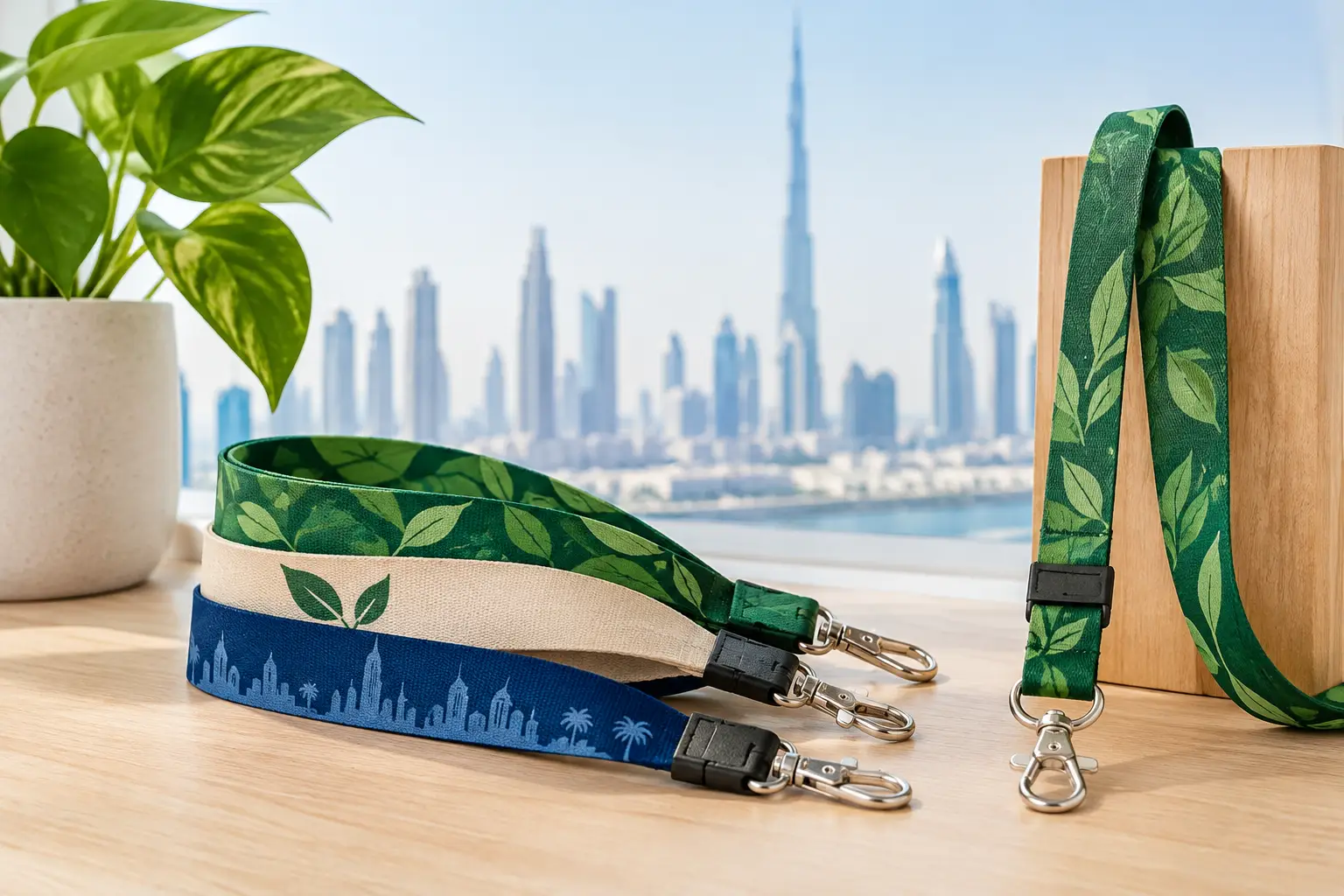
Customized lanyards give marketing and event teams meaningful control over color, messaging, and use case. The strap can carry a company logo, event name, campaign line, sponsor identity, or practical labels such as STAFF, MEDIA, EXHIBITOR, and SECURITY. Full-color sublimation printing is particularly effective when the design includes gradients, detailed artwork, repeating logos, or brand colors that need close visual consistency.
For cleaner, high-contrast designs, screen printing may be a suitable option depending on the fabric, artwork, quantity, and number of colors. The best production method is not always the most elaborate one. A simple one-color logo on a standard polyester strap can be the right choice for a short internal event, while a premium summit with sponsor obligations may require edge-to-edge color and carefully matched branding.
Width also changes both presentation and performance. Narrow lanyards are lightweight and economical, but they offer less space for logos and text. Wider straps provide stronger brand visibility and can feel more substantial, particularly for premium conferences or executive events. However, they may not be necessary for every audience. The right choice depends on badge size, expected wear duration, the design hierarchy, and the role the lanyard plays in the overall event identity.
Attachments deserve the same attention. Swivel hooks work well for standard badge holders, while split rings or lobster clips may suit keys, passes, or heavier credentials. A breakaway safety clasp can be appropriate for staff working around equipment, in hospitality environments, or in active visitor areas. If the credential uses RFID or NFC technology, the badge holder and placement should be reviewed early so scanning remains reliable.
Eco-Friendly Materials Need a Clear Purpose
Sustainability claims are most credible when the material choice is tied to a realistic event plan. Eco-friendly lanyards may be produced from recycled PET, bamboo fiber, organic cotton, or other lower-impact material options. Recycled PET is often selected for corporate events because it can support full-color printing while offering a familiar, smooth finish and dependable day-long wear.
Bamboo and cotton-based options can create a more natural visual and tactile effect, which may suit sustainability conferences, hospitality programs, employee welcome kits, and purpose-driven brand campaigns. The trade-off is that fabric texture, color reproduction, and print detail may differ from polyester. A design created for glossy, high-saturation sublimation may need adjustment for a natural-fiber strap.
An eco-friendly lanyard is also only one part of a responsible credential program. Event teams can reduce unnecessary material use by confirming quantities against registration data, avoiding large overages, using reusable badge holders where practical, and planning post-event collection. For recurring conferences or employee access programs, durable reusable credentials and lanyards may deliver more value than a new single-use set for every activation.
Designing for Visibility, Not Just Approval
A lanyard proof should be evaluated in the conditions where it will actually be used. A logo that appears large on a screen may be too small to recognize from a few feet away. Fine type can become lost on fabric, especially when the strap folds or twists. For most corporate applications, repeating a clear logo or short event identifier along the strap is more effective than placing one oversized design element in a single position.
Contrast is equally important. White artwork on a dark ground usually reads well across venues, while low-contrast tones may look refined in a brand guide but fail under exhibition lighting. Teams should also consider the visual relationship between the lanyard and the badge. If the badge uses multiple colors, logos, access labels, and sponsor content, the lanyard may need a simpler design to avoid visual clutter.
Separate lanyard designs can also improve operational organization. A distinct color for staff, speakers, exhibitors, or VIP guests allows faster visual identification without changing the main badge layout. This works best when colors have a defined operational purpose and are applied consistently across credentials, registration lists, access rules, and onsite staff briefings.
Coordinating Lanyards With Badge Production and Check-In
The most efficient event workflow brings lanyards into the credential plan early. Before approving production, confirm the badge dimensions, orientation, holder style, attachment type, and expected registration volume. A portrait PVC card with a slot punch requires different handling from a landscape paper badge in a clear holder. These choices affect how the credential hangs, scans, and presents the brand.
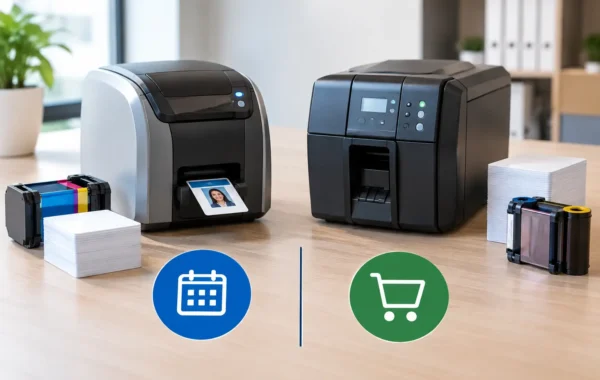
For events using onsite badge printing, it is useful to separate what is pre-produced from what is generated at registration. Branded lanyards, holders, and event backers can be prepared in advance, while attendee names, QR codes, and access permissions are printed on demand. This approach supports accurate late registrations and reduces the risk of unused personalized badges.
For RFID or NFC credentials, production coordination becomes even more important. The card encoding, visual design, lanyard attachment, registration software, readers, and access rules should operate as one system. When these elements are managed separately, small configuration gaps can create delays at entry points. A coordinated provider can align artwork proofs, hardware staging, encoded-card testing, badge printer setup, and onsite technical support before guests arrive.
Smart Track Zone supports this integrated model by combining custom lanyard production with secure badge printing, registration technology, credential encoding, equipment deployment, and specialized onsite support. That single workflow helps event teams protect visual quality while maintaining operational control through every attendee touchpoint.
Planning Lead Times Without Compromising Quality
Corporate events often face changing guest counts, sponsor additions, and late brand approvals. Those realities do not remove the need for production discipline. Custom material selection, printed samples, special attachments, and large volumes require time for artwork approval, procurement, production, inspection, packing, and delivery.
A practical plan starts with confirmed attendee categories and a clear quantity estimate, then includes a sensible contingency for onsite changes. Ordering excessively to compensate for uncertainty creates waste, particularly when the event has sustainability objectives. Instead, teams can reserve a controlled number of generic backup lanyards and print variable attendee credentials onsite where appropriate.
Rigorous quality control should check print clarity, color consistency, strap finishing, attachment strength, and packing accuracy. For large conferences, packing lanyards by category or registration zone can accelerate desk setup and reduce confusion during peak arrival periods. These small operational decisions are often what separate a polished check-in experience from an improvised one.
A well-produced lanyard should make the badge easier to wear, easier to see, and easier to trust. When its material, print, attachment, and credential workflow are planned together, it becomes a dependable piece of event infrastructure – and a brand detail attendees carry through every conversation, session, and entry point.