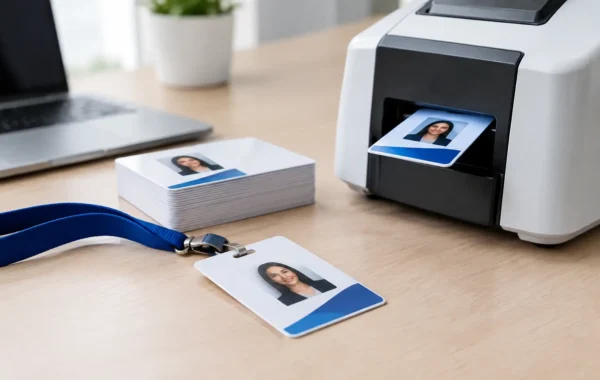
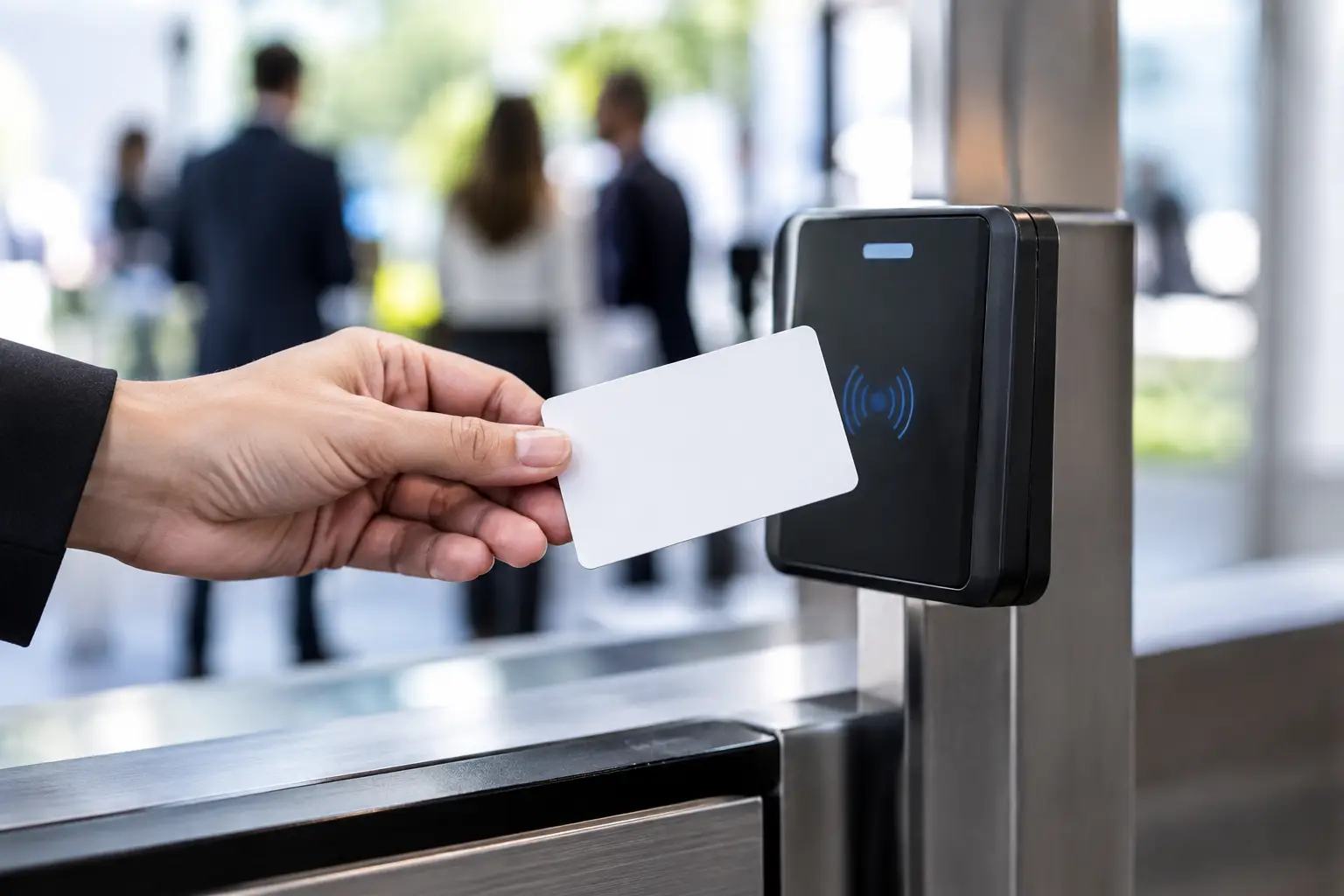

A guest reaches the entry point, presents a branded card, and receives clearance in seconds. That moment looks simple because the technical work happened earlier: RFID access card encoding, reader configuration, credential design, data validation, and onsite testing must all operate as one system. For corporate events, exhibitions, workplaces, and hospitality environments, a card is not merely printed identification. It is a controlled permission tool and a visible extension of the brand.
The difference matters when hundreds or thousands of people arrive within a short window. A well-prepared credential process reduces manual checks, directs guests to the right spaces, and gives organizers a clearer record of attendance. A poorly planned one creates queues, access disputes, and last-minute reprints at the point where first impressions matter most.
What RFID Access Card Encoding Actually Does
RFID access card encoding writes approved data to a contactless card chip so a compatible reader can recognize that credential and apply a defined action. Depending on the program, that action may be opening a door, approving entry to a VIP lounge, recording check-in, authorizing a meal entitlement, or registering access to a staff-only area.
The printed side of the card tells people who the holder is. The encoded chip tells the system what the holder is allowed to do. These are related, but they should not be treated as the same task. A credential can look premium while carrying incorrect permissions, or it can be technically valid while displaying outdated attendee information. Both conditions create avoidable operational risk.
For event programs, the encoded data often references a unique credential number rather than storing extensive personal details directly on the card. When the card is tapped, the event platform or access-control software uses that number to retrieve the relevant record and determine access. This approach supports better privacy management and makes it easier to revoke, replace, or update a credential when plans change.
Start With the Access Journey, Not the Card Design
The right encoding specification begins with a practical question: what should happen at each touchpoint? A conference may need general attendee admission at the main entrance, different permissions for speakers and exhibitors, and restricted access for production teams. A corporate office may need employee access, visitor passes, and time-limited contractor credentials. A hotel activation may prioritize fast guest validation and branded engagement zones.
Mapping these journeys before production prevents a common problem: ordering attractive cards before the reader technology, access rules, or registration platform have been confirmed. The correct chip type depends on the installed infrastructure and the required security level. Reader compatibility, frequency, memory structure, key management, and software integration all need confirmation before encoding begins.
This is also where a simple access matrix becomes useful. It defines each credential group, the locations it can enter, the time periods it is valid, and any special entitlements. For example, an exhibitor badge may allow early-morning hall access, while an attendee badge becomes active only during public event hours. Clear rules make it easier to configure the system and explain exceptions to onsite teams.
Choosing the Right RFID Technology
Not every RFID card operates in the same way. Low-frequency credentials are common in some legacy door-access systems, while high-frequency cards are widely used for modern access control, NFC interactions, cashless programs, and event experiences. The correct selection is the one that matches the reader environment and operational goal – not simply the chip with the lowest unit price.
For controlled corporate applications, secure high-frequency technologies can offer stronger authentication and better protection against simple card cloning than basic proximity formats. However, they may require compatible readers, properly managed encryption keys, and more disciplined configuration. That additional planning is worthwhile when the card controls sensitive areas, valuable assets, or high-profile guest experiences.
A standard card format may be entirely appropriate for a short-term event with low-risk zoning and high-volume distribution. The trade-off is that the system should never imply a security level it does not provide. A technical partner should explain this distinction early, especially when procurement teams are comparing card quotations that appear similar on the surface.
Data Preparation Is Where Most Encoding Issues Begin
Encoding quality depends on clean, approved source data. Before cards reach production, attendee or employee records should be reviewed for duplicate profiles, incorrect access groups, missing identifiers, and inconsistent naming conventions. This is particularly important when registration data comes from multiple sources, such as a corporate guest list, exhibitor portal, speaker coordinator, and onsite walk-in registration desk.
Each record needs a reliable unique identifier that connects the physical card to the correct digital profile. That identifier should remain consistent across the registration platform, badge printing workflow, access-control software, and reporting dashboard. If one system uses an email address while another uses a manually created badge number, matching records can become unnecessarily difficult.
The best approach is to establish a data freeze for the first production batch while retaining a controlled process for changes. New registrations and last-minute upgrades are normal in events. What causes disruption is not change itself, but change without a documented workflow for re-encoding, reprinting, and deactivating superseded cards.
RFID Access Card Encoding Requires Verification
Writing data to a chip is only one stage of production. Every encoded credential should be verified against the expected record and tested with the intended reader environment. Batch checks are useful, but live access programs benefit from individualized verification when security, attendance tracking, or VIP access is critical.
A rigorous quality-control process checks that the chip is readable, the encoded identifier matches the printed credential, the access profile is correct, and the card performs reliably in a real tap scenario. Physical production also matters. A damaged antenna, poor print alignment, or improperly positioned overlay can affect usability even when the data was written correctly.
For large deployments, production should be structured around numbered batches and traceable handover procedures. This makes it easier to identify what has been issued, what remains in stock, and which cards must be replaced or disabled. It also protects the event team from distributing unassigned credentials by mistake.
Test the Full Environment Before Doors Open
A card that reads correctly at a production desk may still fail in the venue if the onsite environment has not been tested. Reader placement, network connectivity, power availability, software permissions, and staff procedures all influence the result. A reader configured for one entrance does not automatically carry the same settings at every gate.
A pre-event test should use real encoded cards from each access group at every relevant entry point. Test standard entry, restricted zones, denied access, lost-card replacement, and offline or degraded-network procedures. This is not an exercise in finding fault. It is how teams identify small configuration gaps before guests encounter them.
For high-attendance events, keep a monitored exception process at registration. Staff should be able to confirm a guest identity, review the access record, issue a replacement card when authorized, and disable the original credential. A visible escalation path prevents the registration counter from becoming a bottleneck when one unusual case appears.
Combine Credentialing With the Event Experience
RFID credentials work best when they are planned as part of the complete event infrastructure. The card artwork should align with lanyards, registration counters, signage, kiosks, and digital communications. Readers should be positioned to support natural guest movement rather than forcing people to search for an access point or form an unclear line.
The system can also support valuable operational insight. Entry timestamps may help organizers understand arrival peaks, session attendance, or traffic between activation zones. That data should be collected with a defined purpose, appropriate consent, and access controls around reporting. More data is not automatically better data; relevant, accurate data is what supports better decisions.
Smart Track Zone coordinates credential production, RFID/NFC encoding, registration technology, hardware staging, and specialized onsite support as one managed workflow. For organizers, that means fewer handoffs between print vendors, software teams, and access-control suppliers – and clearer accountability when timing is tight.
Plan for Change Without Losing Control
No event access plan remains completely fixed. Speakers change, sponsors receive additional passes, staff roles shift, and a VIP may need a different entry route minutes before doors open. The answer is not to weaken control for convenience. It is to prepare a disciplined process that allows authorized changes quickly.
Maintain reserved blank stock, approved artwork templates, and a defined approval owner for access changes. Keep replacement cards visually distinguishable only when that supports the operational plan, and always deactivate lost or replaced credentials immediately. For multi-day programs, review the access log and exception activity at the end of each day so the next morning begins from a known position.
The most effective RFID card program is rarely the one with the most complicated technology. It is the one where card choice, data, design, reader setup, and onsite support match the real movement of people through the venue. When that preparation is in place, every tap becomes quiet proof that the event is under control.