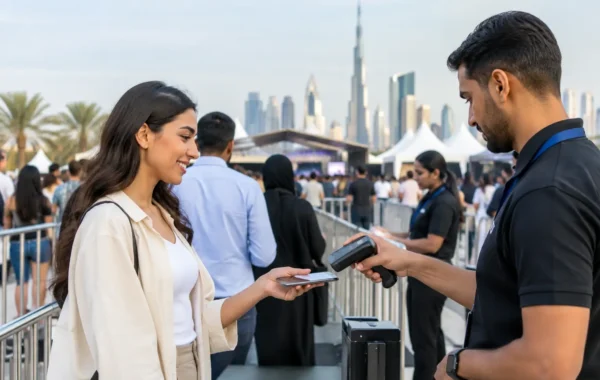
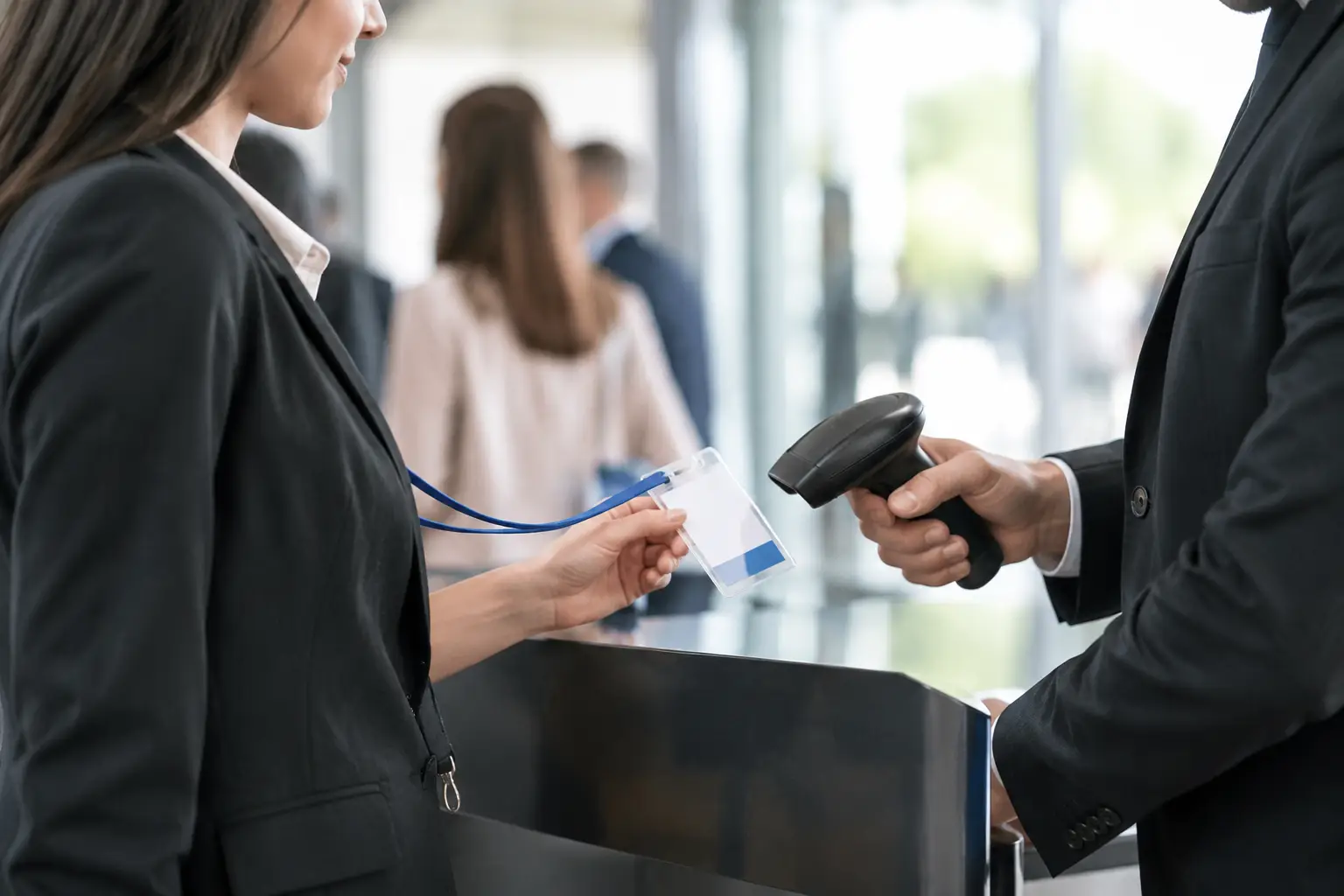

A conference badge is more than a printed name card. It can grant entry to restricted areas, validate meal access, trigger RFID interactions, and represent a guest’s status inside a corporate environment. That is why badge fraud prevention must be designed into the registration and credentialing process before the first attendee arrives.
For event organizers, HR teams, exhibition managers, and security leads, the risk is rarely limited to someone wearing the wrong badge. A copied QR code, an altered printed credential, or an unverified replacement badge can affect access control, attendee data, sponsor entitlements, and the credibility of the entire event. The strongest approach combines secure badge production, controlled registration data, active verification, and a trained onsite team.
Why Badge Fraud Happens at Events
Most badge fraud is not highly sophisticated. It often begins with operational gaps: a badge layout that is easy to reproduce, a generic QR code that is never checked, an unattended collection desk, or a rushed reprint process with no identity verification. At busy conferences and exhibitions, those gaps are easy to miss because registration teams are focused on moving queues quickly.
The level of protection should match the event’s risk profile. A large public exhibition may prioritize fast check-in and clear visitor classification, while a leadership summit, product launch, investor meeting, or controlled corporate facility needs tighter access rules. The goal is not to create friction for every guest. It is to apply the right controls where a fraudulent credential would create a real problem.
A well-planned badge program also protects brand standards. When credentials have inconsistent colors, inaccurate names, poor print quality, or unclear access labels, staff members have a harder time identifying who belongs in each area. Security and presentation are closely connected.
Badge Fraud Prevention Starts With Credential Design
A secure credential should be difficult to copy at a glance and easy for authorized staff to interpret. This requires more than adding a company logo or choosing premium card stock. The badge design needs visible layers that support fast human verification, alongside digital layers that support controlled access.
Color coding is one of the most practical tools. Different colors, borders, lanyards, or clearly positioned access markers can distinguish attendees, speakers, exhibitors, crew, media, VIP guests, and suppliers. The system only works when the visual rules are simple enough for security personnel and venue teams to recognize immediately.
Personalized information adds another layer of control. A full name, company, registration category, and photo make a credential much harder to transfer between people. For higher-security programs, photo badges are especially valuable because staff can compare the credential with the wearer without relying solely on a scan.
Variable data printing should be carefully managed. Each badge record must be linked to the correct attendee profile, access level, and unique identifier. A last-minute change made without approval can create a security issue just as easily as a counterfeit badge. Rigorous quality control during production helps ensure that printed details, encoded data, and visual permissions remain aligned.
Choose Features Based on the Real Risk
Security features should be selected for the event, not added simply because they are available. A polished corporate gathering may benefit from custom die-cut cards, premium lanyards, and controlled QR check-in. A confidential executive event may require RFID or NFC credentials, photo identification, access zoning, and reissue approval procedures.
Useful options include holographic overlays, tamper-evident materials, UV-reactive marks, serialized numbering, photo personalization, and RFID or NFC encoding. Each has a different purpose. A hologram improves visual authenticity, while an RFID credential can enforce digital access permissions at a gate, meeting room, lounge, or hospitality area.
There is a trade-off. More advanced features increase production coordination and may require compatible readers, software configuration, and onsite testing. The best solution is the one that creates meaningful protection without slowing entry or complicating the guest experience.
Secure Registration Data Before Printing Begins
Badge security is often discussed at the entrance, but the process begins much earlier. If registration data is inaccurate or easy to manipulate, even a high-quality credential can be issued to the wrong person. Event registration forms should collect only the information needed for attendance, personalization, and access decisions, while keeping approval workflows clear.
For invitation-only events, organizers can use pre-approved guest lists, confirmation codes, and identity checks at check-in. For exhibition staff and contractors, a separate registration path can prevent temporary workers from receiving attendee-level access by mistake. The same principle applies to VIP credentials: they should be issued through a defined approval process rather than a verbal request at the registration desk.
Data synchronization matters when multiple systems are involved. Registration software, badge printing stations, self-service kiosks, access readers, and reporting dashboards must work from current attendee records. Outdated lists cause more than inconvenience. They can result in denied access for approved guests or access being granted after a registration has been canceled.
Control Printing, Collection, and Reprints
An unattended badge printer can quickly become a weak point. Whether badges are pre-printed or produced onsite, the operation needs ownership. Staff should know who can approve changes, who can access blank stock, and how incomplete or misprinted credentials are handled.
Pre-printed badges are effective for controlled guest lists and high-volume arrivals. They reduce check-in time, but collection tables must be organized by a secure method such as alphabetical stations, invitation groups, or identity verification. Self-service check-in kiosks can speed up arrival for larger events, provided the software confirms the guest record before printing a personalized credential.
Reprints deserve special attention. A lost badge is common, but a replacement should not be automatic. Staff should verify the attendee’s identity, deactivate the previous credential where digital access is used, and mark the replacement in the registration record. This prevents both the original and duplicate badge from being active at the same time.
For events with multiple access zones, clear escalation rules help the onsite team act consistently. A registration coordinator may approve a name correction, while a security lead or event manager approves changes to VIP, backstage, speaker, or restricted-area permissions.
Verify Credentials Where It Matters Most
Not every doorway needs the same control. Main entrances may use a visual badge check to keep arrivals moving, while VIP lounges, speaker rooms, storage areas, production zones, and private meeting spaces require scanning or staff verification. This layered model protects sensitive areas without creating unnecessary queues at every point.
QR codes are useful when each code is unique, linked to a current registration record, and scanned against the event platform. A static code printed on a badge without live validation is easier to duplicate. RFID and NFC credentials offer stronger control for managed entry because permissions can be associated with individual card IDs and adjusted during the event.
Technology alone is not enough. Security and guest services teams need a short briefing on badge types, access categories, exception handling, and escalation contacts. A scanner can identify an invalid credential, but staff still need to know what to do next without causing confusion in front of a guest.
Build an Onsite Response Plan
Even with careful preparation, exceptions happen. A speaker arrives under a different name, an exhibitor requests additional staff access, a badge is damaged, or a VIP assistant needs entry on short notice. The response should be controlled, not improvised.
Before doors open, establish a simple decision path for lost badges, suspected duplicates, unauthorized access attempts, system outages, and access-level changes. Keep a secure manual process available if connectivity is interrupted, but avoid reverting to handwritten badges with no record of issuance. Temporary credentials should be clearly differentiated and logged.
At Smart Track Zone, secure credentialing is planned alongside registration workflows, branded badge production, equipment staging, and onsite technical support. This integrated approach helps event teams avoid the common disconnect between a visually impressive badge and the systems required to validate it.
The most effective badge fraud prevention program is rarely the most complicated one. It is the one your registration team can operate confidently, your security staff can verify quickly, and your attendees can move through without uncertainty. When credential design, technology, and onsite procedures support one another, access control becomes a quiet part of a well-run event rather than a visible source of risk.