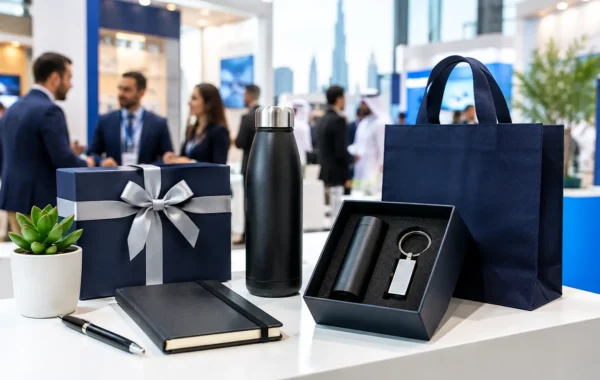


A guest checks in at a conference, receives a precisely branded badge, and leaves with an item they will use after the event. That final item can extend the experience well beyond the venue. Well-planned corporate gifts are not simply giveaways. They are physical brand touchpoints that support recall, appreciation, and a more polished perception of the organization behind the event.
For marketing teams, HR departments, and event organizers, the challenge is not finding products with a logo. It is selecting gifts that suit the audience, reflect the occasion, meet the required quality standard, and arrive ready for distribution without creating another operational task.
Why Corporate Gifts Need a Clear Purpose
The strongest gift programs begin with a practical question: what should the recipient feel, do, or remember after receiving this item? A premium gift for senior clients has a different role from an onboarding kit for new employees. Exhibition giveaways need to attract attention and travel easily, while conference gifts may need to support the attendee throughout a full day of meetings.
This purpose affects every decision, from product category and material to packaging and quantity. A reusable insulated bottle may be valuable for an outdoor activation or staff wellness campaign. A refined notebook and pen set can support a leadership meeting or client presentation. NFC-enabled cards, smart accessories, or branded technology items may suit audiences attending innovation-focused events.
Cost matters, but unit price should not be the only measure. A low-cost item that is quickly discarded can dilute a premium brand position. A more considered item with long-term usefulness often delivers better visibility because it remains on a desk, in a bag, or in daily use. The right choice depends on the recipient, event scale, campaign objective, and expected lifetime of the product.
Choose Gifts for the Moment and the Recipient
A corporate gift should feel appropriate rather than generic. Start by separating the recipient groups. Employees, VIP guests, prospective customers, speakers, exhibitors, and media partners may all attend the same event, but they do not need the same item or presentation.
For employee recognition, usefulness and personal relevance are usually more effective than novelty. Premium drinkware, travel accessories, desk essentials, and curated welcome kits can reinforce that the organization has invested thought in the experience. For client gifting, materials, finish, and presentation are often decisive. A finely produced gift box, discreet branding, and a well-finished product communicate more than a large logo ever could.
At trade shows, practicality is especially important. Attendees may collect materials from dozens of exhibitors, carry items across large venues, or travel immediately after the event. Compact, lightweight products with genuine utility tend to perform better than bulky items that create inconvenience. If the gift supports a direct interaction, such as scanning a QR code, booking a meeting, or accessing post-event content, the technology must be tested before doors open.
Materials and Production Quality Shape Perception
The product itself represents the brand long after the event team has packed down the venue. That makes material selection and print quality operational priorities, not finishing details. A logo that cracks, fades, appears misaligned, or loses color accuracy can undermine the entire experience.
Different items require different decoration methods. UV printing is well suited to many hard surfaces and can produce sharp, full-color results on items such as power banks, pens, desk accessories, and packaging. Sublimation printing is valuable for products that require vivid, edge-to-edge color on compatible coated surfaces and textiles. Laser engraving can create a restrained, premium look on metal or wood, while embroidery may be the better choice for apparel and selected fabric products.
There is no single best production method. The right approach depends on the material, artwork, quantity, color requirements, and intended use. A dark product may need a white underbase for accurate color reproduction. Fine lettering may require artwork adjustments to remain legible at a small size. Metallic finishes can look premium, but they may alter how brand colors appear. Reviewing a branding proof before full production protects consistency and avoids costly last-minute changes.
Make Branding Visible Without Making It Loud
Corporate gifting works best when the branding feels deliberate. A prominent logo can be appropriate for event uniforms, promotional giveaways, or team merchandise. For executive gifts and hospitality items, a more subtle placement may feel more premium and encourage continued use.
The design should consider the full object, not only the logo area. Packaging colors, typography, inserts, ribbons, sleeves, and even the way a product is arranged in a gift box can support the campaign identity. When a conference includes branded badges, lanyards, registration kiosks, digital signage, and gifts, visual alignment creates a stronger overall impression. Guests may not identify every production detail, but they notice when the experience feels organized and complete.
Avoid forcing a full brand guideline onto a small product. A simplified logo mark, campaign message, monogram, or carefully selected color can produce a cleaner result. The objective is recognizable branding with absolute consistency, not maximum visual density.
Plan Corporate Gifts as Part of Event Operations
Gifts often become a last-minute concern because the focus is naturally on registration, venue production, speakers, and guest logistics. Yet gift distribution can create bottlenecks if it is not planned early. A premium item handed to VIPs needs secure storage, accurate allocation, and a clear handover point. A large-volume giveaway needs enough stock at multiple locations and a distribution method that does not slow check-in.
For conferences and launches, consider how the gift interacts with the attendee journey. It may be placed in a welcome bag, issued after badge collection, presented at a hosted dinner, or collected from a branded activation zone. Each option changes the staffing, storage, inventory, and wayfinding requirements.
Integration is especially useful when gifts are connected to credentials or registration data. A specialized onsite team can configure a process in which selected attendee categories receive a specific item at check-in, while stock levels are monitored during the event. For premium or limited gifts, QR-enabled credentials can help verify collection and reduce duplicate distribution. This approach is valuable when managing VIP programs, employee appreciation events, or high-value product launches.
Build a Reliable Production Timeline
A polished gift program needs enough time for consultation, design approval, sample review, production, quality control, packing, and delivery. International sourcing, custom molds, special finishes, and large quantities can increase lead times. If an event date is fixed, product selection should account for the full production window rather than the date artwork is submitted.
A practical workflow begins with the recipient profile, quantity, budget range, and event date. Next comes product selection and artwork adaptation, followed by a proof that confirms placement, dimensions, colors, and any variable data. Production should include quality checks for print clarity, color alignment, product condition, and packaging accuracy. Finally, items should be counted, packed by distribution group where needed, and staged for delivery or onsite deployment.
For UAE and Saudi Arabia events, this level of coordination becomes particularly valuable when gifts must arrive alongside badges, lanyards, equipment rentals, kiosks, and other event materials. Smart Track Zone can combine branded-product production with the wider event environment, helping teams reduce supplier handoffs and maintain control over brand presentation from registration through final guest engagement.
Treat the Gift as a Continuing Brand Experience
The best corporate gifts earn their place after the event. They are useful enough to keep, well made enough to represent the brand, and relevant enough that recipients associate them with a positive interaction. That result comes from thoughtful selection and disciplined execution, not from adding a logo at the end of a campaign.
When the product, print method, packaging, and distribution plan are managed as one experience, a simple gift can continue doing valuable brand work long after the venue lights are off.