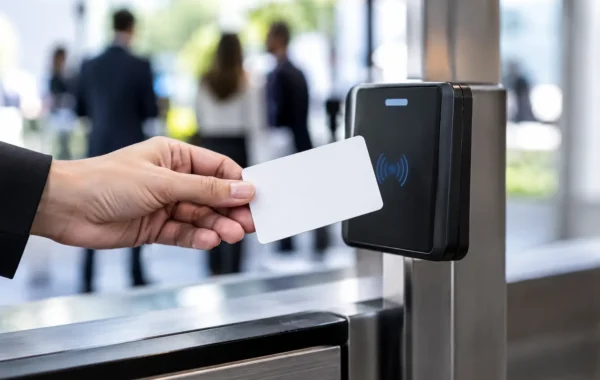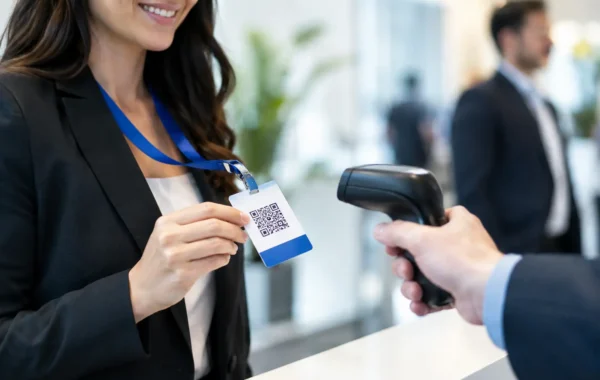
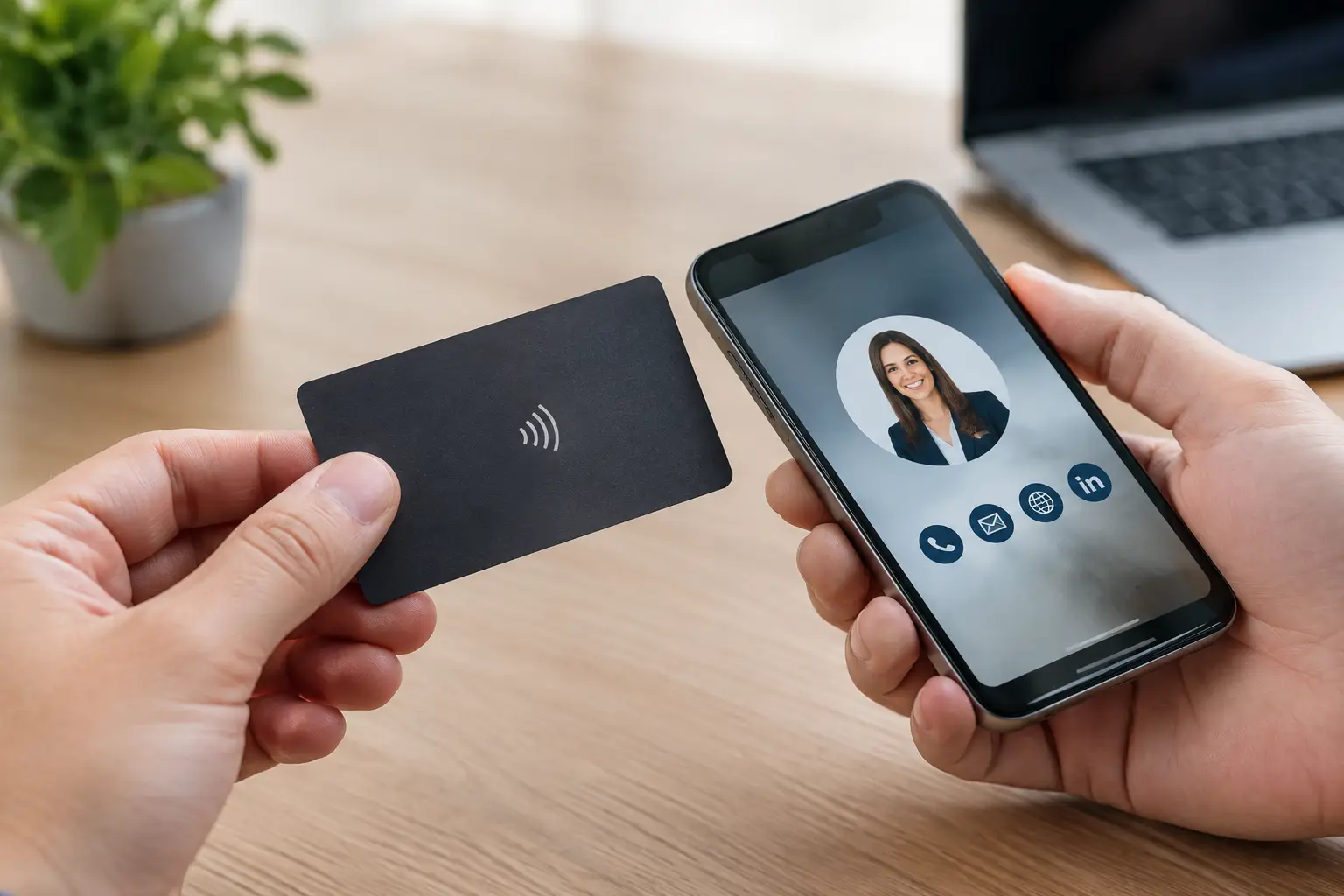

A conversation at a trade show can last two minutes. The value of that conversation depends on what happens in the next two seconds. Custom NFC business cards let a prospect tap a phone and move directly to the right next step: a contact profile, product page, meeting calendar, portfolio, registration form, or campaign landing page.
For corporate teams, this is not simply a modern replacement for a printed card. It is a controlled brand and engagement tool. The card must look premium in hand, work immediately across common smartphones, point to the correct digital destination, and support the wider event or sales workflow. That is where thoughtful design, accurate NFC encoding, and disciplined production matter.
Why Custom NFC Business Cards Belong in Corporate Workflows
Traditional business cards create a familiar problem: contacts are collected, placed in a pocket, and often forgotten. An NFC-enabled card reduces the effort required to continue the conversation. The recipient taps the card, accesses relevant information, and can save details or take action while interest is still high.
That immediate connection is especially useful when your team is meeting many people in a short period. At exhibitions, product launches, investor meetings, hospitality activations, and executive roadshows, representatives need an efficient way to share approved information without searching for brochures or asking visitors to type a URL.
The strongest applications are specific. A sales director may share a digital contact card and booking link. A property representative may direct visitors to an interactive project brochure. An HR team can use cards at a recruitment event to bring candidates to open roles. A hospitality operator can connect VIP guests to a concierge page, feedback form, or loyalty enrollment route.
A card can also be updated after printing when it uses a managed destination URL. This makes it more flexible than a printed phone number or campaign-specific QR code. However, flexibility should not become an excuse for unclear planning. The digital experience still needs a defined owner, approved content, and a clear purpose.
The Experience Starts Before the Tap
NFC technology may be small, but the physical card remains a visible statement about your organization. A poorly finished card can weaken the impression before the technology has a chance to work. Material selection, color accuracy, typography, surface finish, and encoding placement all affect the final result.
For most corporate applications, PVC offers a dependable balance of durability, print quality, and practical encoding. It suits staff cards, sales cards, membership credentials, and event-issued cards that must survive regular handling. Premium alternatives such as metal, wood, or layered acrylic can create a stronger visual statement for executive gifting or limited campaigns, but they require more careful engineering. Metal in particular can interfere with NFC performance unless the chip and antenna are designed with an appropriate protective layer.
Custom NFC business cards should also make their purpose obvious. A discreet tap icon or short instruction can prevent hesitation, especially with audiences unfamiliar with NFC. The instruction should be elegant, not oversized. Good design guides the recipient without turning the card into a technical manual.
Card design and digital destination must match
The card’s visual message and its destination should feel like one campaign. If the card presents a premium new product, the tap should not lead to an outdated generic homepage. If it is issued to an event host, the destination should reflect the event identity, agenda, or follow-up path.
This consistency is one reason NFC cards are valuable within a broader branded environment. The same visual standards can carry across registration pages, attendee badges, digital signage, tabletop displays, kiosk screens, and post-event communications. Each touchpoint reinforces the next rather than forcing attendees to interpret disconnected materials.
Decide What the Tap Should Accomplish
Before choosing a card finish or placing an order, define the required action. One card can carry an NFC tag that opens a single link, but that link can lead to a carefully structured mobile page with several approved options. The simpler the intended action, the more likely the recipient is to complete it.
For a sales team, a contact profile with a save-to-phone option, company overview, and meeting request form is often enough. For a product launch, a campaign page may need video, technical specifications, lead capture, and a request-for-demo route. An employee or visitor credential may direct users to a secure portal, location map, safety guidance, or access instructions.
Avoid asking one card to serve every audience. A general corporate card, an exhibition lead-generation card, and a VIP hospitality card may all use the same visual system, but their destinations should be tailored to the moment. This protects relevance and improves reporting.
Where campaign measurement is required, use trackable links and define what counts as a meaningful interaction. Tap volume alone is useful but incomplete. Teams may also want to know whether visitors saved contact details, submitted a form, scheduled a meeting, downloaded a brochure, or returned after the event. Measurement should be planned with privacy and consent requirements in mind, particularly where forms collect personal information.
Encoding Accuracy Is a Production Requirement
An NFC card is only effective if every programmed card opens the intended destination reliably. This sounds basic, yet large or personalized runs create avoidable risk when data files, naming conventions, card IDs, and approval stages are not controlled.
A professional workflow begins with a data review. The production team confirms whether every card shares one destination or whether each recipient requires a unique profile, ID, URL, or encoded value. Variable data cards need clean source files, precise field mapping, and test records before full production begins.
Encoding is then followed by verification. Cards should be tested for read performance and destination accuracy, with particular attention to unique records and sample cards from each production batch. When cards support event operations or visitor management, testing should also include the connected registration, access, or CRM workflow. Printing a correct name onto a card is not enough if its encoded identity points to the wrong attendee record.
Security depends on the use case
Not every NFC card needs the same level of protection. A public-facing networking card that opens a contact page has different requirements than an employee badge, membership card, or controlled-access credential.
For public cards, the focus is usually brand safety and destination management. Use approved web destinations, maintain ownership of the routing link, and avoid embedding sensitive personal data directly on the tag. For credentials linked to access, payments, membership status, or protected records, the security model should be designed around the reader system, card technology, encryption requirements, permissions, and replacement process.
NFC is not automatically a security solution. It is a technology component. The right configuration depends on what the card is allowed to do, who can read it, and what happens if it is lost. Clear card issuance rules and deactivation procedures are as important as the chip itself.
Bring NFC Cards Into the Event Environment
NFC cards are most effective when they support a complete guest journey rather than operating as a standalone giveaway. At a conference, for example, the same technology can support pre-event registration, desk check-in, printed badge personalization, lead retrieval, session attendance, and sponsor engagement. The exact setup depends on attendance volume, venue requirements, and the level of data integration required.
For smaller executive events, a premium NFC card may function as a personal invitation, a networking tool, and a post-event follow-up trigger. For large exhibitions, the priority may be fast issuance, reliable scanning, and consistent branding across hundreds or thousands of credentials. These are different operational models, and they should not be sourced or configured in the same casual way.
Smart Track Zone approaches these projects as connected delivery work: consultation, custom design, encoding, production, hardware staging where needed, and specialized onsite support. That integrated approach helps corporate teams avoid the gap between a beautifully printed card and the technology environment required to make it useful.
Questions to Settle Before Production
A short planning stage prevents expensive rework later. Confirm the card’s main action, whether content will change after printing, and whether recipients need a personal or shared destination. Then confirm the physical requirements: card material, finish, quantity, personalization, packaging, and delivery timeline.
For operational credentials, add the details that determine reliability: software platform, reader compatibility, access rules, data fields, onsite printing needs, fallback process, and technical support coverage. A card that works perfectly in a test environment may still create delays if the check-in station, scanner configuration, or network plan is incomplete.
The best custom NFC business cards do not ask people to admire the technology. They make the next action feel natural, protect the quality of the brand, and give your team a dependable way to carry a conversation forward.