
A conference badge that smudges at registration, a branded gift with fading artwork, or a wayfinding sign that arrives too late can weaken an otherwise polished event. UV printing addresses these practical production risks by placing crisp, durable color directly onto a wide range of materials. For corporate teams asking what is UV printing, the short answer is this: it is a digital print method that uses ultraviolet light to cure ink almost immediately after it is applied.
That speed changes more than the print finish. It supports short production windows, detailed personalization, and reliable brand presentation across event credentials, promotional products, display pieces, and corporate gifts.
What Is UV Printing and How Does It Work?
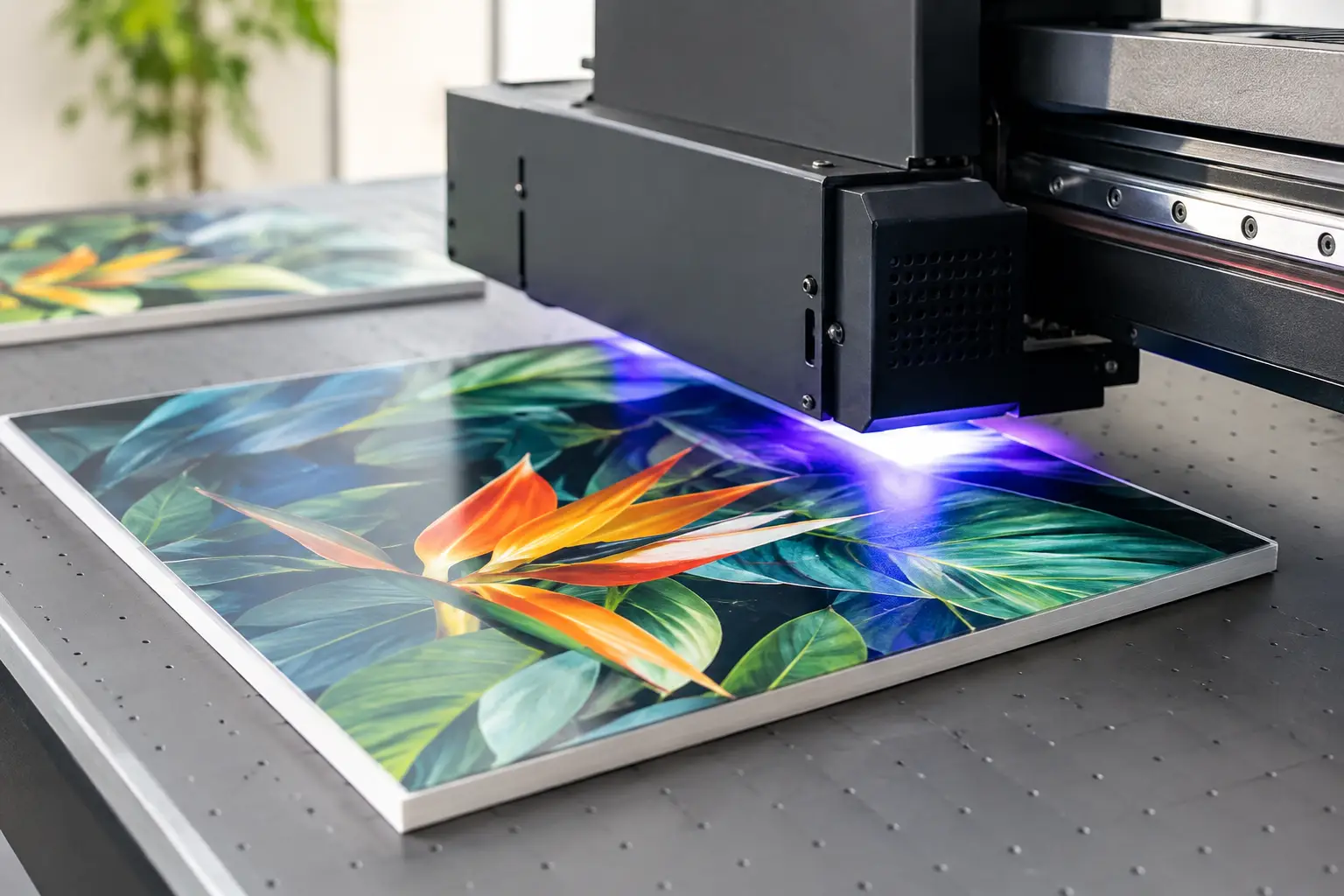
UV printing uses specially formulated liquid inks and ultraviolet lamps. A digital printhead deposits the ink onto the material, then UV light cures it into a solid layer before it can spread, soak in, or remain wet. Unlike conventional ink that may need time to dry or absorb into paper, UV ink is fixed almost instantly.
The process is commonly performed on flatbed UV printers, where items or sheets sit on a printing bed while the printhead moves across them. Depending on the equipment and product shape, UV printing can also be used for direct-to-object decoration. This makes it suitable for rigid materials that are difficult or impossible to run through traditional paper-based printing equipment.
A typical job begins with approved artwork and accurate product dimensions. The production team sets print areas, color profiles, ink layers, and positioning guides. The printer then applies cyan, magenta, yellow, and black inks, often called CMYK, to build full-color artwork. White ink can create opacity on dark or transparent substrates, while clear ink can add a gloss effect, texture, or a subtle raised finish.
The result is sharp branding with strong visual impact. Because the ink sits on the surface rather than absorbing deeply into it, small text, fine lines, QR codes, and detailed logos can remain highly defined when the file and material are properly prepared.
Why UV Printing Matters for Corporate Branding
For an event, every physical touchpoint carries a message. A registration badge, sponsor plaque, desk sign, staff credential, branded notebook, or VIP gift should look like it belongs to the same campaign. UV printing supports that absolute consistency across materials with very different textures and colors.
It is especially useful when a project needs fast production without accepting a generic finish. Once cured, the printed item can usually be handled immediately. This helps when event materials must move quickly from approval to packing, delivery, and onsite deployment.
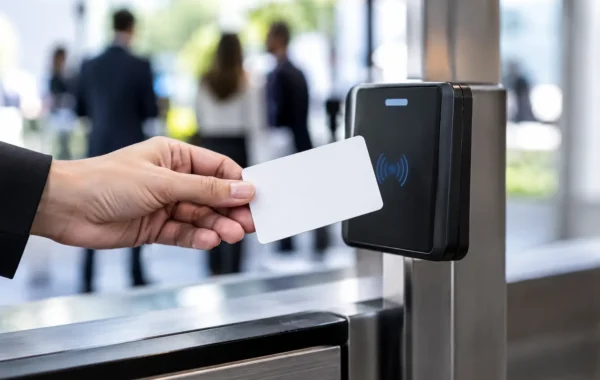
UV printing also supports variable data. Names, job titles, serialized numbers, QR codes, and other changing information can be printed as part of the same digital workflow. For visitor management and access-control applications, this allows a design system to be applied consistently while each credential remains individually identifiable.
Strong color on difficult surfaces
Materials such as acrylic, PVC, coated board, metal, wood, glass, and certain plastics do not always absorb conventional ink well. UV technology is designed to print on the surface, making it a practical option for rigid and nonporous items.
White ink is particularly valuable on clear acrylic, dark cards, black gift boxes, or metallic surfaces. Without a white underbase, colors can appear translucent or altered by the material beneath them. With the right ink layers, a brand mark can retain its intended visibility and contrast.
Fast handling and organized production
Immediate curing supports efficient production staging. Printed pieces do not need to sit aside waiting to dry before they are inspected, packed, or prepared for the next finishing step. For corporate projects with multiple deliverables, that can reduce bottlenecks in the production schedule.
Speed does not remove the need for quality control. Alignment, ink adhesion, color balance, and variable-data accuracy still need to be checked rigorously. The advantage is that teams can identify and correct issues quickly instead of discovering them after a long drying period.
Which Materials Can UV Printing Handle?
UV printing is valued for its versatility, but it is not a single solution for every substrate. Common options include PVC cards, acrylic panels, foam board, wood, aluminum composite, coated metals, glass items, leatherette products, and selected promotional merchandise.
For event and corporate applications, this can mean direct printing on badge holders, table signs, recognition plaques, branded boxes, desk accessories, nameplates, phone stands, and premium gift items. It can also support printed inserts, display elements, and directional signage where a clean, high-resolution finish matters.
Material testing remains essential. Surface coatings, oils, textures, flexibility, and shape can affect adhesion. A smooth acrylic sheet may produce excellent results, while a curved bottle or a silicone item may require different equipment, special primers, or an alternative decoration method. The right question is not simply whether a printer can place ink on an item. It is whether the finished print will remain attractive through handling, packing, transport, and intended use.
UV Printing vs. Sublimation and Traditional Methods
UV printing and sublimation are both effective digital decoration methods, but they serve different production needs. Sublimation transfers dye into specially coated items through heat and pressure. It is often an excellent choice for polyester textiles, coated drinkware, and products designed for full-wrap color.
UV printing applies cured ink directly onto the surface. It is generally better suited to rigid signs, cards, acrylic pieces, flat merchandise, and materials that cannot tolerate high heat. It can also create white layers and textured or glossy effects that are not typical of sublimation.
Traditional screen printing remains useful for very large production runs with simple artwork, especially on specific substrates. However, it usually requires setup time and separate screens for each color. UV printing is more flexible for short runs, personalized output, detailed graphics, and late-stage changes. For a corporate event with changing attendee data or sponsor artwork, that flexibility can be more valuable than the lowest possible unit cost.
A Practical UV Printing Workflow for Events
Reliable output begins before the printer is switched on. Artwork should be created at the correct size, with high-resolution images and vector logos where possible. Fine text needs enough weight to remain readable, and QR codes need adequate contrast and quiet space around the code to scan reliably.
The material should then be confirmed against the intended use. A badge that will be worn for several days has different durability requirements from a tabletop sign used for one evening. A premium gift may need a proof that checks not only color but also placement, texture, and the visual relationship between the artwork and the product finish.
For event programs, production planning should account for quantities, personalization data, packing sequence, and onsite distribution. For example, attendee badges may need to be sorted alphabetically, by company, or by access category. Signage may need labeling by venue zone and installation point. These operational details prevent a high-quality printed item from becoming an onsite logistics problem.
At Smart Track Zone, UV production can be coordinated with credential design, RFID or NFC card encoding, kiosk branding, and event hardware staging. That integrated approach is valuable when physical branding and registration technology must arrive ready for flawless deployment.
Design Considerations That Protect the Finish
UV printing produces strong results when the design respects the product. Avoid placing critical details too close to edges, holes, hinges, or curved sections. If a logo is printed over a texture, metallic finish, or transparent surface, request a proof to confirm how the substrate changes the final appearance.
Color expectations also require practical judgment. Digital colors can look different on a bright white PVC card, clear acrylic, natural wood, or brushed metal. A controlled proofing process helps establish the best ink layers and underbase treatment before full production begins.
Durability depends on the item and its handling conditions. UV-cured ink is durable, but repeated abrasion, harsh chemicals, prolonged outdoor exposure, or constant flexing can affect any printed surface. Where needed, use protective finishing, choose a more suitable substrate, or match the decoration method to the product’s real-world use.
For corporate teams, the value of UV printing is not simply that it can put a logo on almost anything. It is the ability to produce precise, personalized brand materials on demanding timelines while keeping every event touchpoint organized, legible, and ready to perform when guests arrive.