
A credential is more than a name badge when it controls entry, captures attendance, supports networking, and represents the event brand. The choice between RFID versus QR credentials affects the registration desk, venue access points, reporting accuracy, staffing requirements, and the guest experience from arrival through departure.
For corporate events, exhibitions, staff programs, and hospitality environments, neither technology is automatically the better choice. RFID and QR credentials solve different operational problems. The right decision depends on event size, security requirements, session volume, budget, connectivity, and how much interaction the credential must support after check-in.
RFID Versus QR Credentials: The Core Difference
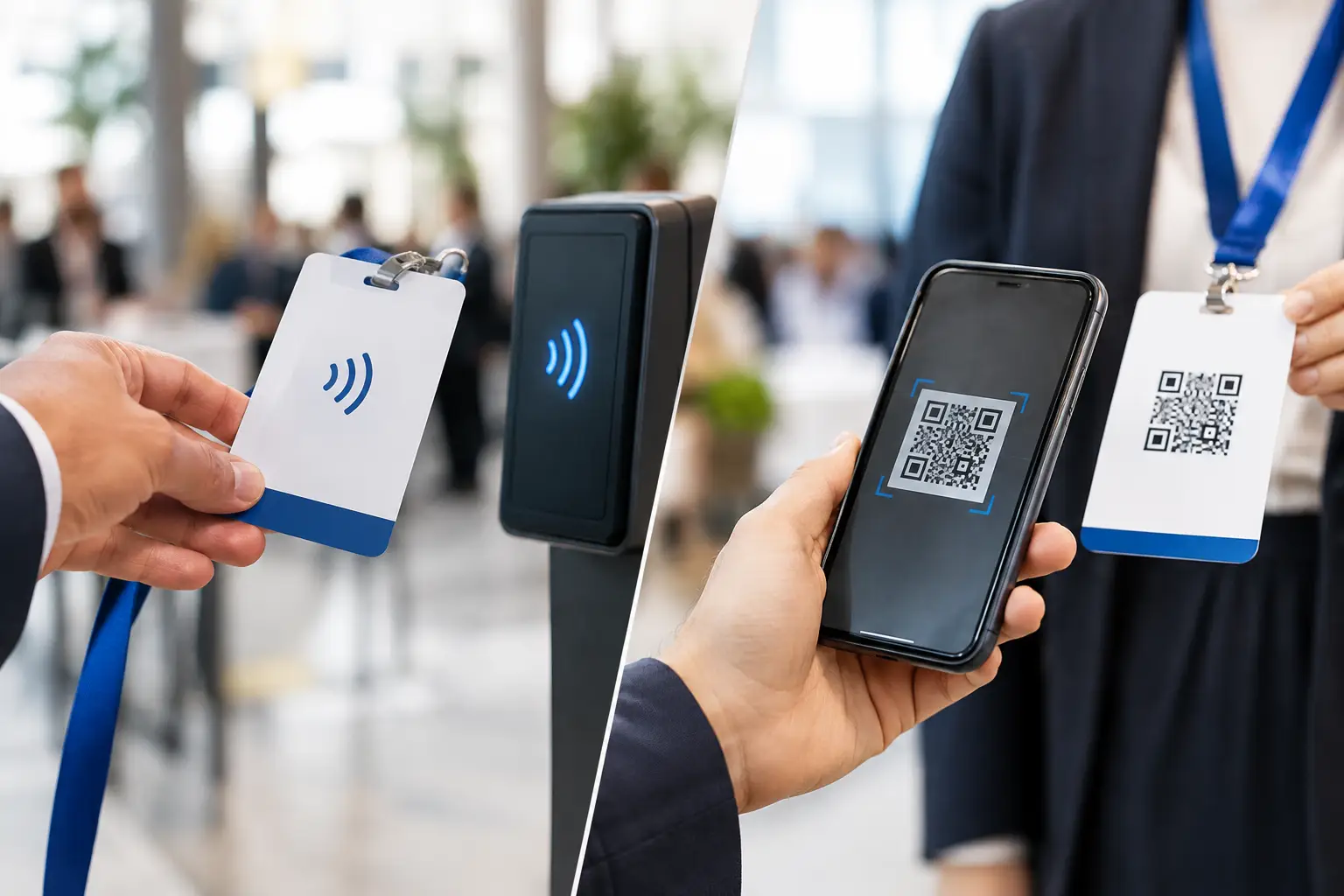
RFID credentials contain an embedded chip and antenna that communicate with a compatible reader using radio frequency. An attendee can typically tap or hold the badge near a reader for access, attendance tracking, cashless activity, lead capture, or engagement triggers. RFID may be delivered through PVC cards, wristbands, badges, or NFC-enabled formats, depending on the application.
QR credentials use a unique printed code that is scanned by a mobile device, tablet, kiosk camera, or handheld scanner. The code can appear on a printed badge, an email confirmation, a mobile wallet pass, or an event app. Once scanned, the registration platform verifies the attendee record and records the interaction.
The visible difference is simple: RFID is read electronically at close range, while QR is scanned visually. Operationally, however, that distinction shapes the entire event workflow.
When RFID Is the Better Event Credential
RFID is designed for speed and repeated interaction. It is especially effective when a guest needs to access multiple zones, attend several sessions, participate in activations, or move through high-volume entry points.
At a large conference, for example, RFID readers can be configured at the main entrance, VIP lounge, breakout rooms, catering areas, and exhibition activations. Each tap creates a timestamped record. Event teams gain a clearer picture of arrivals, dwell time, session attendance, and engagement without asking guests to repeatedly present a code to a camera.
RFID also creates a more polished access experience. A well-configured tap point can process attendees quickly, reducing queues at busy entrances. This is valuable for executive events, product launches, exhibitions, and employee gatherings where delays at the door immediately affect perception.
RFID supports layered access control
Access rules can be assigned to each credential before the event. A sponsor may enter exhibitor zones and networking lounges, while a standard delegate may access only selected sessions. If an attendee upgrades, loses a badge, or requires a replacement, the permissions can be updated in the system without rebuilding the entire access structure.
This makes RFID particularly suitable for events with restricted areas, credential tiers, VIP hospitality, staff-only zones, or paid workshops. The technology is not only about faster entry. It provides stronger operational control when access permissions are complex.
RFID has a higher production and infrastructure requirement
The advantage comes with a greater setup commitment. RFID projects require encoded cards or wristbands, compatible readers, software configuration, testing, power planning, hardware placement, and onsite support. The badge design must also account for chip placement, card material, printing method, and durability.
For a small breakfast briefing with one entry point, that infrastructure may be unnecessary. For a multi-day event with thousands of repeated interactions, it can be a highly efficient investment.
When QR Credentials Are the Better Choice
QR credentials are flexible, familiar, and fast to deploy. They work well for standard check-in, low-complexity access control, invitation verification, visitor registration, and events where attendees may prefer to use their phones.
A QR code can be generated as soon as an attendee completes registration. This supports late registrations and reduces the risk of pre-printing badges for guests who do not attend. At check-in, a registration team scans the code, verifies the attendee, and prints the badge if required.
For many corporate events, this is the most practical workflow. It keeps costs controlled while still providing reliable attendance records and professional guest handling.
QR credentials are ideal for variable guest lists
Guest lists often change close to an event. Executives add colleagues, delegates transfer tickets, and invitees confirm at the last minute. QR-based registration accommodates this movement efficiently because codes can be issued digitally and updated through the event platform.
QR is also useful when attendees move through only one or two controlled points. If the main requirement is to confirm entry and print a personalized badge, a QR workflow can deliver the right level of technology without overbuilding the operation.
QR scanning depends on presentation and scanning conditions
A QR code needs to be visible and readable. A damaged print, dim phone screen, cracked display, glare, or poorly positioned scanner can slow down a checkpoint. These issues are manageable with quality badge printing, well-tested scanners, and trained staff, but they should be considered during planning.
QR access can also become slower when a large number of guests must present codes simultaneously. Multiple scanning lanes and self-service check-in kiosks help manage volume, yet RFID may still be more efficient for rapid repeat entry.
Comparing RFID and QR for Event Operations
| Operational factor | RFID credentials | QR credentials | | — | — | — | | Entry speed | Very fast for repeat tap access | Fast for standard check-in, dependent on scanning | | Setup requirement | Higher, with readers, encoding, and testing | Lower, using scanners or camera-based devices | | Credential cost | Higher per unit | Lower, especially for printed or digital codes | | Access control | Strong for multiple zones and permission levels | Effective for basic and moderate controls | | Last-minute changes | Possible through system updates | Highly flexible for digital issuance | | Data capture | Strong for repeated touchpoints | Strong where scanning stations are deployed | | Best fit | Multi-zone, high-volume, premium events | Registration-led events and adaptable guest lists |
The table does not mean RFID is always more advanced and QR is always basic. A QR system can be sophisticated when paired with self-service kiosks, real-time registration software, badge printers, and properly designed scanner stations. Likewise, RFID only delivers value when the reader network and attendee journey are planned carefully.
Design and Brand Quality Still Matter
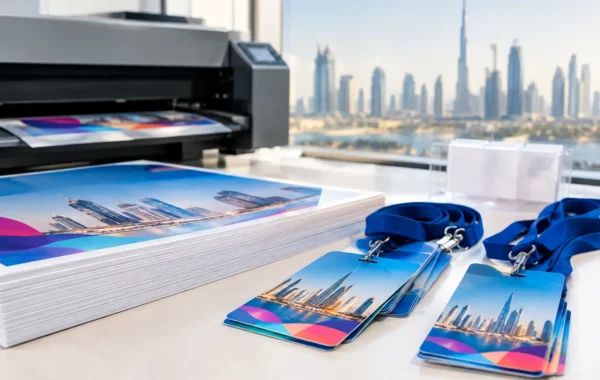
Technology should not reduce the credential to a functional object. A badge is frequently the most visible branded item a guest receives. It needs to look intentional while remaining easy for staff and scanners to use.
For RFID badges, this means selecting the correct card stock, card orientation, lanyard attachment, print finish, and encoded chip format. For QR badges, it means providing adequate code size, contrast, quiet space around the code, and a position that remains scannable when the badge is worn. Placing a QR code over a busy background, metallic finish, or dark pattern is a common production error.
The most effective credentials separate visual hierarchy from operational data. The attendee name, company, role, event identity, and access designation should be readable at a glance. The code or embedded technology should work quietly in the background without compromising the design.
Plan the Workflow Before Selecting the Credential
The better question is not, “Should we use RFID or QR?” It is, “What must the credential do at every touchpoint?” Start with the attendee journey: invitation, registration, arrival, badge collection, entry, session attendance, activation participation, and exit reporting.
Then identify where data must be captured and where access must be controlled. A single-entry leadership forum may need QR invitation scanning and premium printed badges. A trade show with multiple halls, sponsor activations, and controlled workshops may justify RFID-enabled cards with staged reader points.
Technical readiness is equally important. Reader and scanner locations should be mapped against venue layout, queue patterns, power availability, network coverage, and staffing positions. Testing should include actual badges, real attendee records, expected lighting, and the planned hardware configuration. This is how a system moves from a promising concept to dependable event execution.
For UAE and Saudi Arabia events with compressed setup windows, an integrated supplier can reduce handoffs between registration software, badge production, hardware rental, branding, and onsite support. Smart Track Zone coordinates these elements as one event environment, allowing the technical setup and physical credential to be tested together before guests arrive.
Choose for the Experience You Need to Deliver
Choose QR credentials when flexibility, fast issuance, and controlled costs are the priority. Choose RFID when high-volume movement, repeat engagement, detailed access permissions, and premium operational flow justify the additional infrastructure.
The strongest credential strategy is the one that feels effortless to attendees and fully controlled to the event team. Define the journey first, test every checkpoint before doors open, and let the technology serve the experience rather than compete with it.