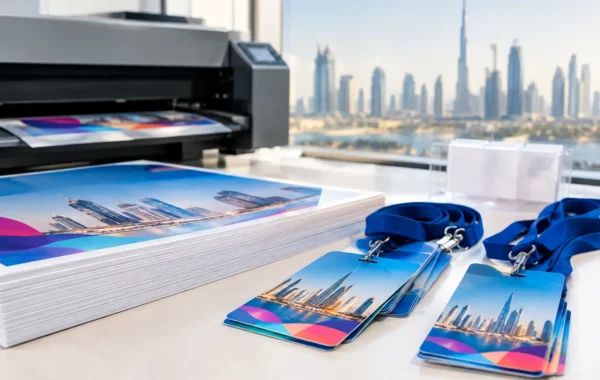


A visitor’s first physical interaction with your event or workplace is often a credential. Visitor badges do far more than display a name: they establish who has arrived, where they can go, and how professionally your organization manages people, security, and brand presentation.
For corporate events, exhibitions, offices, and hospitality environments, a badge must work under real operating pressure. Registration lines build quickly. Guest lists change. VIPs arrive early, exhibitors need access before doors open, and security teams need a clear way to identify approved visitors at a glance. The right badge strategy turns these moving parts into an organized arrival experience.
Why Visitor Badges Matter Beyond Identification
A badge is a compact operational tool. It gives staff an immediate visual signal, helps guests navigate an unfamiliar environment, and creates a consistent point of contact between your brand and every attendee. When credentials are poorly designed, printed late, or difficult to read, the impact is felt well beyond the registration desk.
At a conference, unclear badge categories can send attendees into the wrong sessions, lounges, or backstage areas. In a corporate office, generic paper passes can make it difficult for reception and security teams to distinguish a scheduled visitor from an unauthorized person. At an exhibition, a badge that does not identify exhibitors, contractors, buyers, and organizers can slow down access control at the busiest entrances.
Well-planned visitor badges solve these issues by combining clear visual hierarchy with the right production and access technology. They support security without making the guest experience feel restrictive. They also help teams maintain control when attendee volumes increase or last-minute changes occur.
Start With the Badge’s Operational Purpose
The best credential format depends on what the badge needs to do after it is issued. A one-day product launch may need fast onsite printing and a polished branded finish. A multi-day trade show may require color-coded access levels, exhibitor information, and scannable QR codes. A controlled corporate facility may need visitor credentials linked to a host, visit date, and approved access zone.
Before finalizing artwork, define the operating rules. Consider who will receive a badge, how long it remains valid, whether it needs to be returned, and which teams need to recognize it. This prevents a common issue: designing an attractive badge first, then trying to force security requirements into limited space.
For many organizations, visitor categories include guests, VIPs, speakers, media, exhibitors, sponsors, staff, contractors, and technical crew. These groups do not always need separate designs, but they should be distinguishable within seconds. A color band, role label, icon, or access strip can provide that clarity without compromising a premium visual standard.
Choose the Right Credential Format
Paper insert badges are cost-effective for high-volume events and allow names to be printed quickly. They work well with branded holders and lanyards, especially when credentials are valid for a short period. The trade-off is that they are less durable and can be easier to transfer between people if no additional verification is used.
PVC cards offer a more substantial, premium credential. They are a strong fit for executive meetings, membership programs, long-term visitor management, and events where access control is a priority. PVC can also support QR codes, barcodes, RFID, or NFC encoding, making the badge part of a wider digital infrastructure rather than a simple printed pass.
For single-use access, adhesive visitor labels can be practical in workplace reception environments. They are quick to issue and make date-based validity highly visible. However, they may not match the brand presentation required for high-profile client events or formal corporate gatherings.
The correct choice is not always the most advanced one. If a badge only needs to identify attendees for a two-hour internal meeting, RFID encoding may add cost without meaningful operational value. If the event has multiple access zones, cashless functions, lead retrieval, or attendance tracking, a basic printed insert may not provide enough control.
Design for Fast Recognition, Not Just Visual Appeal
Badge artwork should be easy to read from a practical distance. The attendee name needs to be prominent, particularly at networking events where people rely on badges to start conversations. Job title, company name, and category should support the name rather than compete with it.
A clean information hierarchy usually places the event or company brand at the top, followed by the attendee name in the largest type size. Role, company, access category, and a QR code can then be positioned in supporting areas. Avoid placing critical information over complex backgrounds, reflective finishes, or images that reduce contrast.
Color coding deserves careful attention. It should help operational teams identify categories instantly, not create a confusing rainbow of classifications. Use colors consistently across badges, signage, registration screens, and access points. For example, a speaker badge can use the same color cue shown on speaker lounge signage and staff briefing materials.
The reverse side of a badge also has value. It can include a schedule, venue map, emergency contact, Wi-Fi details, sponsor recognition, or a short code of conduct. This is especially useful when guests may not have immediate access to event apps or printed programs.
Connect Badges to Check-In Technology
Visitor badges are most effective when production and registration operate as one workflow. Pre-registered guests should be able to find their record quickly, confirm details, and receive an accurately printed credential without manual re-entry. This reduces queue time and limits errors in names, companies, and access categories.
For larger events, self-service check-in kiosks can handle standard attendee arrivals while a staffed counter manages VIPs, walk-ins, special requests, and exceptions. Badge printers should be staged with sufficient stock, tested templates, backup power considerations, and a clear network plan. A printer failure at peak arrival time is not a minor technical inconvenience. It affects the entire guest experience.
QR-enabled badges can connect physical attendance to digital actions. Staff can scan credentials to validate entry, monitor session attendance, manage meal access, or support exhibitor lead capture. RFID and NFC credentials can extend this further by enabling touchless access or engagement points. The technology should be configured around the attendee journey, not deployed simply because it is available.
Plan for Exceptions Before Doors Open
Even the most accurate registration list will change. Names are corrected, colleagues are substituted, guests arrive without confirmation, and access permissions are updated. A reliable badge operation includes an exception process with trained staff, approved escalation paths, and the ability to reprint credentials without disrupting the main queue.
Prepare for duplicate badges as well. If an attendee loses a credential, the original should be invalidated where access technology is in use. For sensitive zones, replacement badges should follow a clear verification process rather than being issued on request alone.
Make Security Visible but Respectful
The strongest visitor-management systems do not create unnecessary friction. They give authorized people a clear path through the venue while allowing staff to address exceptions discreetly. Badge colors, dates, access labels, and scannable credentials help security teams make fast decisions without repeatedly asking guests to explain why they are present.
For workplace visitors, include the visit date and, where appropriate, the host or department. For events, distinguish credentials that permit backstage, exhibitor setup, technical access, or VIP hospitality. Temporary access should be clearly time-bound, particularly for contractors and suppliers working before or after public event hours.
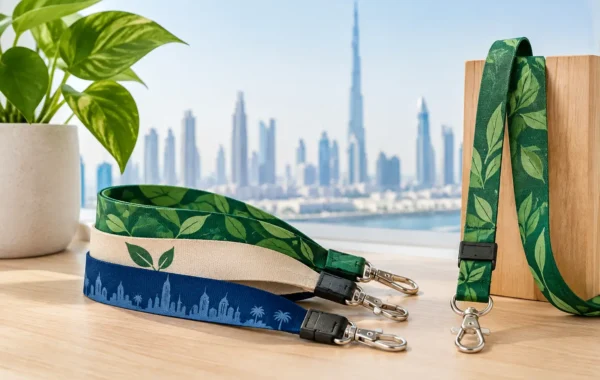
Lanyards and badge holders are part of this system. A poor-quality holder that bends, tears, or obscures the printed insert undermines readability and brand quality. Breakaway lanyards may be appropriate where safety policies require them, while premium woven or printed lanyards can strengthen sponsor visibility and event identity.
Build a Production Plan That Protects Quality
Badge quality is decided well before the first attendee arrives. Start with a data review to standardize name formats, organization names, title fields, categories, and special characters. Confirm which records require photos, encoding, access permissions, or variable data. Then approve print proofs and test scans on the actual equipment that will be used onsite.
Production planning should account for contingency stock. Extra blank cards, holders, lanyards, printer ribbons, labels, and pre-approved generic credentials provide protection against late registrations and damaged materials. For high-profile events, it is also wise to separate standard badge production from VIP and secure-access credentials, with defined handling procedures for each.
Smart Track Zone can coordinate badge design, data-driven production, registration technology, printer staging, branded lanyards, and onsite technical support as one managed deployment. This reduces handoffs between suppliers and gives event teams a single operational partner accountable for the credential experience.
A visitor badge may be small, but it carries a large share of the event’s operational responsibility. When its design, data, technology, and production are planned together, guests spend less time waiting and more time engaging with the experience you created.