
A conference can have an excellent agenda, respected speakers, and a strong venue, then still feel improvised the moment a guest reaches registration. A printed badge with the wrong color, an unbranded check-in screen, or unclear directions to the meeting room creates doubt before the program begins. Event branding is the operational discipline that prevents those moments by making every physical and digital touchpoint look, function, and feel like the same organization.
For corporate teams, the goal is not to place a logo on every available surface. The goal is to give attendees a clear, confident experience while protecting the standards that marketing, leadership, and sponsors expect. That requires visual control, technology planning, production accuracy, and an onsite team prepared for real conditions.
Event Branding Begins Before Attendees Arrive
The attendee experience starts well before the opening session. An invitation, registration portal, confirmation email, QR code, and pre-event communication establish expectations. If the visual system changes when the guest arrives at the venue, the event loses continuity at the point where confidence matters most.
Start with a practical brand application plan. This should translate approved logos, colors, typography, imagery, and messaging into specific event assets rather than leaving interpretation to multiple vendors. Determine what the guest will see in sequence: registration confirmation, entrance signage, check-in screen, badge, lanyard, agenda display, session-room signage, sponsor wall, and follow-up material.
This sequence is more useful than treating branding as a list of print items. It exposes gaps early. For example, a branded welcome wall may look impressive, but it does not solve the problem of an attendee who cannot identify the correct registration queue. A high-quality badge design also needs a readable name, appropriate access designation, and a layout that can be produced accurately at speed.
For exhibitions and large conferences, the plan should include zones. Arrival, registration, networking, main stage, breakout rooms, hospitality, sponsor activation, and exit areas each serve a different purpose. Their messaging, hardware, and visual hierarchy should reflect that purpose without breaking the overall identity.
Make Registration Part of the Brand Experience
Registration is where brand presentation and event operations meet most directly. It is also where poorly coordinated suppliers become visible. If kiosks, tablets, printers, counters, cables, staff uniforms, and signs appear unrelated, the result feels temporary even when the event budget is substantial.
A properly configured registration environment combines a branded software interface with staged hardware and clear wayfinding. Self-service check-in kiosks can reduce queue pressure for high-volume events, while staffed counters remain valuable for VIPs, walk-ins, accessibility needs, and exception handling. The correct mix depends on attendee profile, arrival patterns, venue layout, and how much verification is required.
Branding should support speed, not compete with it. Onscreen instructions need high contrast and short prompts. QR codes must scan reliably under venue lighting. Queue signs should tell guests where to go before they reach a desk. Badge printers need enough stock, ribbons, power, and network capacity to maintain output through peak arrivals.
This is where an integrated provider brings a measurable advantage. Smart Track Zone can align registration software, touchscreen kiosks, badge printers, branded interfaces, and onsite technical support as one deployed environment. That reduces handoffs between a design agency, print supplier, rental company, and registration platform team, which is often where small inconsistencies become onsite delays.
Credentials Carry More Than a Name
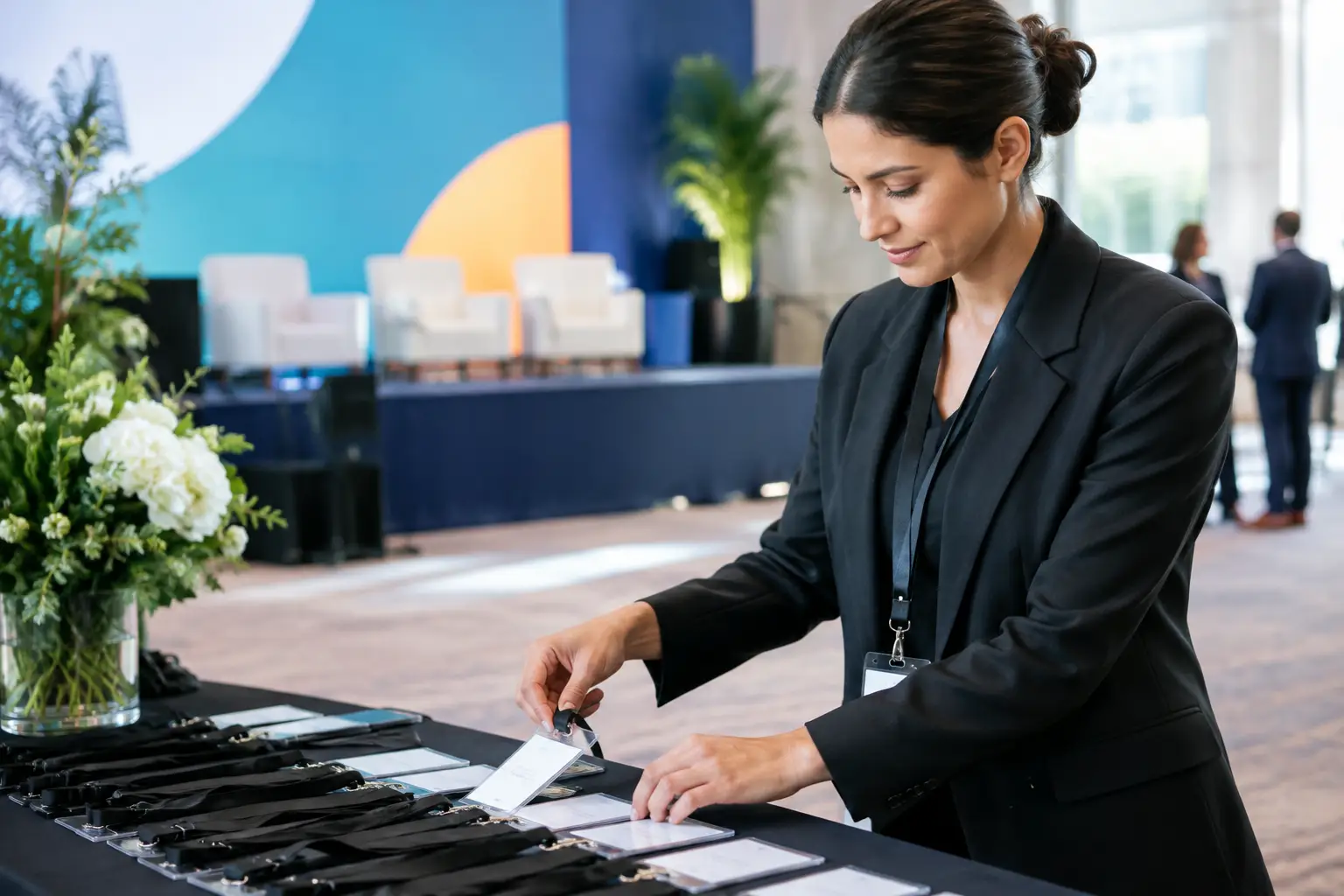
An attendee badge is one of the most persistent branded objects at an event. It is photographed, worn throughout the venue, and often retained after the event. Yet credentials must perform operational work that a simple printed card cannot always handle.
A well-designed badge balances recognition, legibility, access, and security. The attendee name should be readable from a reasonable distance. Job title, company, attendee category, and access level should be organized without visual clutter. Color coding can distinguish exhibitors, speakers, VIPs, staff, media, or delegates, but only when the system is clear enough for security and hospitality teams to use quickly.
For controlled-access environments, PVC credentials can be encoded with RFID or NFC technology, or paired with QR-based validation. These options support entry management, session access, lead capture, or attendance reporting. The right technology depends on the event objective. QR credentials can be efficient for straightforward scanning and lower-complexity deployments. RFID or NFC is more appropriate when rapid tap-based access, repeated interactions, or richer tracking is required.
The trade-off is not only cost. More advanced credentialing requires earlier data preparation, testing, device configuration, and staff training. A premium access system is only effective when the scanning points, rules, and support process have been planned with the same rigor as the printed design.
Build a Consistent Physical and Digital Environment
Event branding becomes convincing when the venue works as one environment. That means the stage backdrop aligns with the presentation template, the digital signage follows the same visual rules as the directional signs, and the registration interface feels connected to the badge in the attendee’s hand.
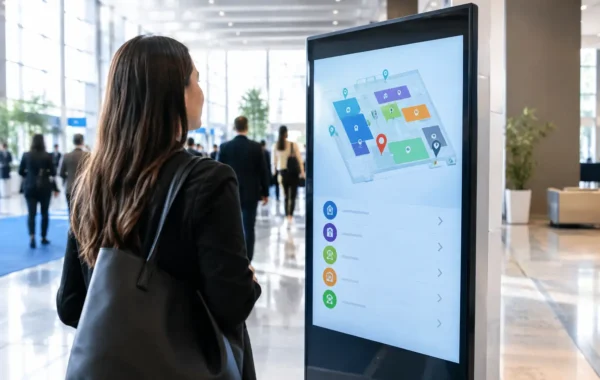
Digital signage is particularly valuable because it can respond to changing conditions. Session times, room changes, queue instructions, sponsor messages, and emergency guidance can be updated without reprinting materials. Interactive screens and touchscreen directories can also reduce pressure on event staff by helping guests find rooms, schedules, exhibitors, or service points independently.
However, digital displays should not replace essential static wayfinding. If a guest needs immediate direction, a well-placed sign is often faster than asking them to navigate a menu. The strongest approach uses both: permanent directional cues for core movement and digital content for live information, engagement, and timely updates.
Physical materials need the same production discipline. Exhibition lanyards, counter wraps, popup displays, name cards, gift packaging, and promotional merchandise must use approved artwork and consistent finishing. A variation in logo placement, color tone, or material quality may seem minor in isolation, but it becomes obvious when multiple items are placed in the same venue.
Rigorous proofing is essential. Before production, confirm dimensions, bleed, color references, variable data fields, barcode placement, encoding requirements, and installation surfaces. Before deployment, inspect finished items and test the actual hardware configuration. This protects both brand quality and the event schedule.
Design for Real Venue Conditions
An event environment is rarely as controlled as a brand guideline document. Lighting shifts, entrances move, queues form in unexpected places, and a sponsor may request a late change. Strong event branding anticipates these realities rather than assuming every asset will be viewed under ideal conditions.
Consider sightlines. A sign that reads well at a desk may disappear in a crowded ballroom. Consider material durability. Outdoor activations, hotel loading docks, and frequent handling place different demands on print finishes and mounting methods. Consider power and connectivity. Digital displays, kiosks, and printers require a documented equipment layout, cable plan, backup options, and technical ownership.
Also consider what happens when the attendee data changes. Last-minute registrations, name corrections, duplicate records, and access upgrades are normal. An onsite badge-printing workflow should allow authorized staff to resolve these cases without creating an inconsistent badge format or delaying the guest unnecessarily.
This is why onsite execution deserves the same attention as creative development. A specialized onsite team can monitor printer output, support check-in staff, adjust screen content, replace consumables, and resolve technical issues before they affect the attendee experience. The event should not depend on a remote support ticket during the busiest fifteen minutes of the day.
Measure What the Brand Experience Achieved
Not every outcome is captured by a photograph of the venue. After the event, review whether branding improved operational clarity as well as visual impact. Registration wait times, kiosk completion rates, badge reprint volume, scanning activity, session attendance, and visitor movement can reveal where the environment supported guests and where it created friction.
Feedback from frontline teams is equally useful. Registration staff can identify confusing instructions. Security teams can report whether access categories were immediately recognizable. Sales teams can assess whether sponsor activations attracted the intended audience. These observations turn event branding from a one-time production exercise into a repeatable operating standard.
For recurring conferences, roadshows, employee events, or visitor-management programs, retain approved templates, equipment configurations, print specifications, and lessons from each deployment. This speeds future planning while preserving absolute consistency across locations.
The most effective branded event does not ask attendees to notice every branded item. It gives them the feeling that everything is exactly where it should be, works when needed, and reflects a company prepared to deliver on its promises.