

A packed registration desk at 8:45 a.m. can define how guests perceive a conference before the first speaker takes the stage. The same is true of a badge that prints incorrectly, a kiosk that is not configured, or signage that arrives in the wrong color. Finding reliable event planning services in Dubai is therefore less about choosing the most impressive pitch and more about identifying a partner that can manage details under real event conditions.
For corporate teams, the right provider should bring more than venue contacts or creative concepts. They should have a clear operating method for registration, technology, branded materials, staffing, delivery schedules, approvals, and onsite issue resolution. Reliability is visible well before event day.
Define What “Reliable” Means for Your Event
Reliability should be measured against the risks specific to your event. A small executive breakfast may need discreet branding, accurate guest lists, and polished hospitality coordination. A trade show or product launch may require high-volume badge printing, RFID or QR-enabled credentials, interactive displays, equipment staging, and technical coverage throughout the day.
Start by documenting the attendee journey from arrival to departure. Consider how guests register, receive credentials, find their session or stand, interact with content, and access restricted spaces. This exercise quickly reveals whether you need a traditional event planner, a technology and production specialist, or one integrated partner that can coordinate both.
A reliable provider will ask operational questions early. How many attendees are expected at peak arrival? Is pre-registration required? Will VIPs, exhibitors, staff, and visitors need different badge types? What happens if an attendee’s details change onsite? These questions are not unnecessary complexity. They are how an experienced team protects the event from preventable pressure points.
Look Beyond the Proposal and Review the Operating Model
A visually polished proposal is useful, but it does not prove deployment capability. When evaluating event planning services, ask how the provider moves from approved concept to installed event environment. The answer should include practical steps such as site assessment, floor-plan review, hardware layout, registration workflow configuration, artwork proofing, production checks, delivery timing, and onsite testing.
A provider with a defined workflow can identify conflicts before they become expensive. For example, a branded registration counter may look appropriate in a rendering but leave insufficient room for badge printers, queuing, power access, and staff movement. A dependable partner considers the technical and physical requirements together.
Ask who is responsible for each workstream. When registration software is handled by one company, equipment rental by another, badges by a print vendor, and event branding by a fourth supplier, accountability can become unclear. Multiple specialists can work well for large productions, but only if one party owns integration, schedules, and final readiness checks.
Test Their Response to Change
Corporate events rarely remain fixed after the first brief. Speaker lists change, attendance grows, artwork receives late approval, or a venue adjusts access times. Reliability is not the absence of change. It is the ability to absorb change without losing control of quality or timing.
Ask prospective suppliers for examples of how they manage late registration updates, reprints, last-minute branding changes, or an additional check-in station. Their response should be specific. Vague assurances are less valuable than a clear explanation of backup equipment, approval deadlines, production capacity, and onsite escalation procedures.
Evaluate Event Technology as a Managed Service
Technology has become central to the guest experience, especially at conferences, exhibitions, internal corporate events, and visitor-management programs. Yet technology only performs well when it is configured for the event rather than simply delivered to the venue.
For registration and check-in, assess whether the provider can manage attendee data, badge templates, printer configurations, QR code scanning, self-service kiosks, and support staff. A fast check-in experience depends on more than a scanner. It requires tested data, correctly encoded credentials where needed, adequate printer capacity, spare consumables, stable network planning, and a team that knows how to intervene quickly.
The same standard applies to interactive digital signage and touchscreens. Ask how content will be loaded, tested, updated, and monitored onsite. If the display is intended for wayfinding, confirm that its placement supports actual guest movement rather than only visual impact. If it is used for lead capture or engagement, clarify who owns the data process and how the equipment will be supervised.
Smart Track Zone approaches this work as integrated event infrastructure: technology configuration, hardware staging, branded production, and specialized onsite support are planned as one operating environment. That model is particularly useful when a corporate team needs consistent execution across physical and digital touchpoints.
Check Brand Production Standards Before You Commit
Event planning is also brand execution. A company may have excellent event coordination skills but limited control over printed materials, branded merchandise, badges, signage, lanyards, and display graphics. If brand presentation matters, request production samples and artwork proofs before approving the full order.
Look closely at color consistency, material quality, finishing, legibility, and durability. A badge must remain readable after hours of wear. A lanyard should support the intended credential without twisting or fraying. A directional sign needs to be visible under the venue’s lighting conditions. Premium production is not only aesthetic. It supports organization and attendee confidence.
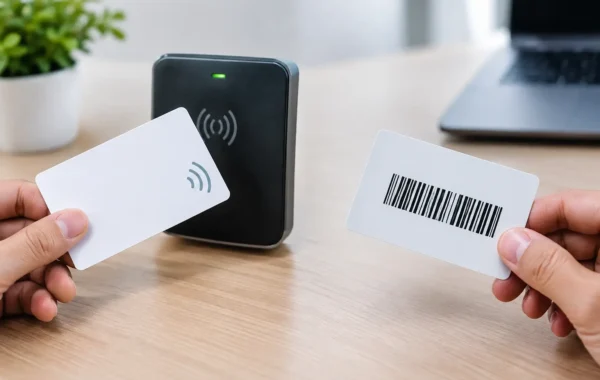
For secure or functional credentials, confirm the required technology in advance. PVC ID cards, RFID/NFC-encoded cards, QR-enabled badges, and access-control credentials have different technical requirements. The supplier should be able to explain card encoding, data verification, print personalization, and replacement procedures in plain operational terms.
Protect Approval and Quality-Control Timelines
The fastest way to compromise event production is to leave approvals until the final days. Build a schedule that includes artwork submission, proof review, content lock, production, packing, delivery, and onsite setup. A reliable partner will identify which deadlines are fixed and which can accommodate limited changes.
This matters even more for high-volume or personalized production. Names, titles, company details, access levels, and QR codes should be verified before printing begins. Confirm how the final attendee file is transferred, who approves it, and how errors are corrected. Rigorous quality control should be part of the service, not an optional extra.
Assess Onsite Support, Not Just Delivery
Equipment delivered to a venue is not the same as an operational event solution. For critical functions such as registration, check-in, badge printing, kiosks, or digital displays, confirm whether a trained technician or event support team will be present during setup and live operation.
The level of support depends on the event. A short meeting with a small guest list may only need pre-event testing and a responsive contact person. A multi-day exhibition, large conference, or high-profile launch usually benefits from dedicated onsite personnel, spare devices, replacement print supplies, and clearly defined response times.
Ask direct questions: Who arrives first? Who tests every station? Who can authorize a configuration change? What backup equipment is available? Who remains onsite during peak arrival? The answers reveal whether the provider sees event day as a handoff or as a managed deployment.
Use a Practical Supplier Evaluation Process
When comparing providers, avoid selecting solely on price or presentation. Lower initial costs can create greater exposure if the scope excludes installation, testing, technical support, delivery coordination, or reprints. At the same time, the most extensive package is not automatically the right answer for a simple event.
Compare proposals against the same operational brief and assess four areas: scope ownership, technical readiness, production quality, and onsite accountability. Then review what is included, what is assumed, and what triggers additional charges. This creates a more useful comparison than a headline price alone.
A reliable partner will be comfortable documenting deliverables, timelines, dependencies, and responsibilities. They should also tell you where a requirement introduces risk, whether that is a very late branding change, limited venue access, a complex attendee-data structure, or unrealistic setup time. Straight answers protect the project.
The strongest event service relationship is built before the venue doors open. Choose the team that can translate your brand, guest flow, and operational requirements into a tested environment, then stay accountable when the schedule gets tight and the room starts to fill.